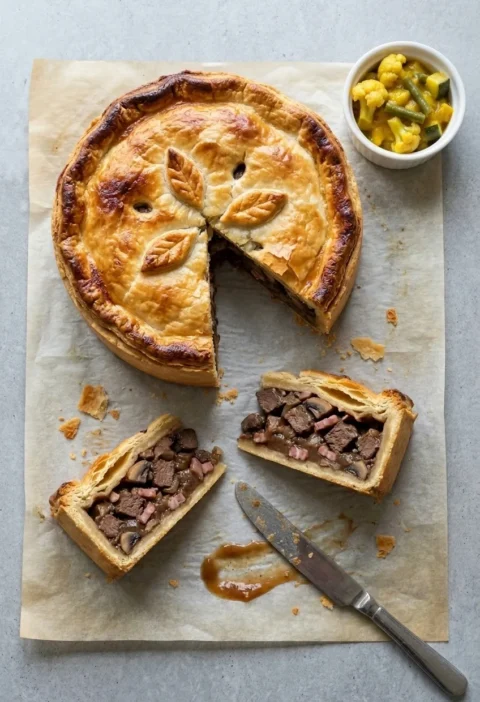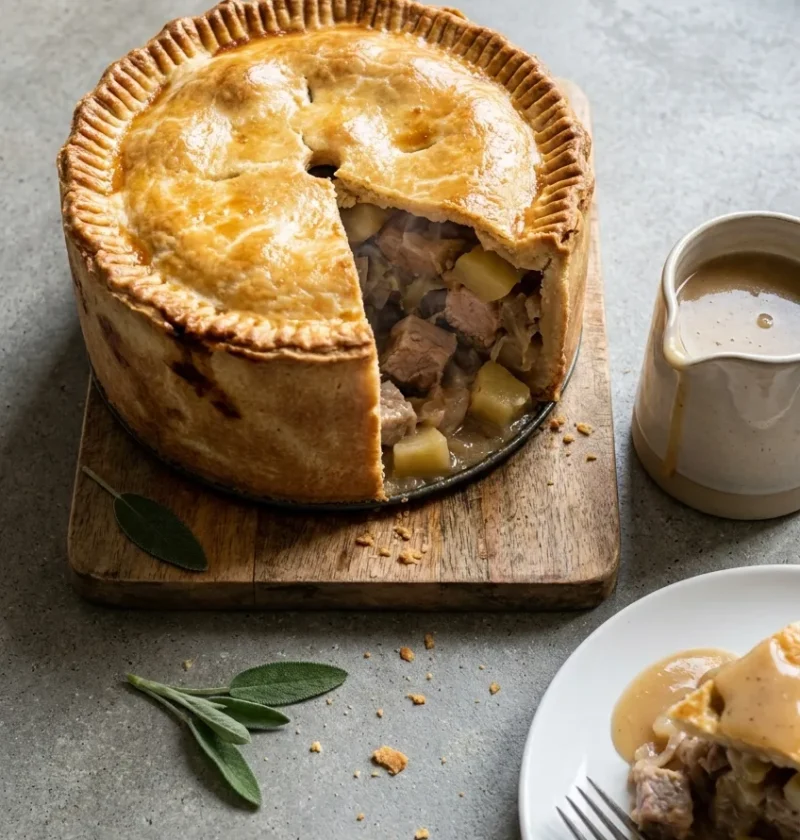
This Hairy Bikers pork and apple pie is a hot dinner under a shortcrust lid, eaten with a knife, fork and plenty of gravy. Perfect Pies serves eight from one 23cm tin, at about 800 calories a slice.
“Pork and apple are a classic flavour combination and make a belter of a pie,” says the book. It adds that gravy is a must for some pies, so their cider gravy comes built into the recipe rather than left to you.
The clever part is that nothing gets wasted, because the pork braises in cider first and that liquor becomes the gravy. Two hours of slow cooking make the meat tender, then the same pan juices finish the plate.
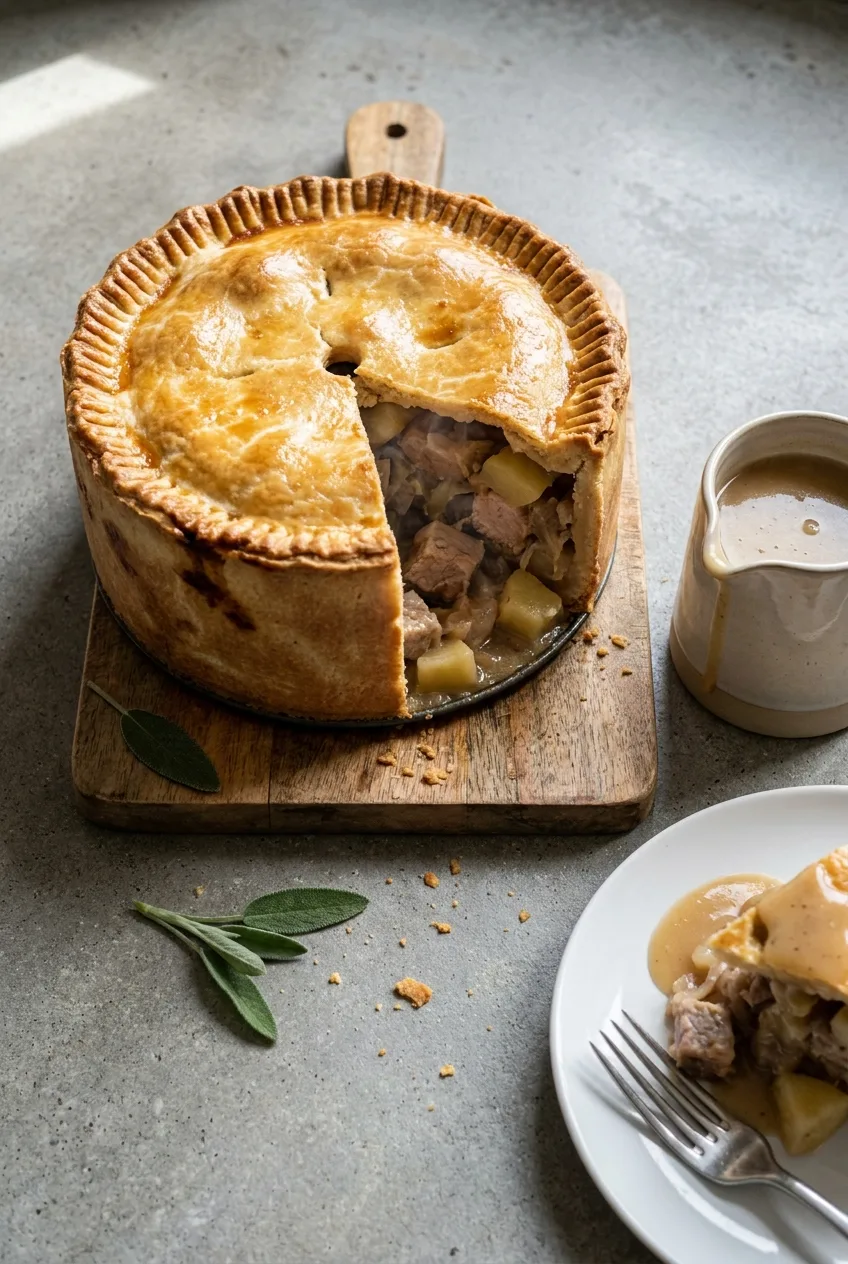
Hairy Bikers Pork and Apple Pie Recipe
Description
Chunks of pork shoulder cook slowly in dry cider with sage and bay, then join Bramley apples inside a butter and lard shortcrust. The strained braising liquid thickens with cornflour into a cider gravy for pouring at the table.
Ingredients
For the filling
For the shortcrust pastry
Instructions
- Brown the pork: Season the pork generously, then fry it in a tablespoon of the oil over a medium-high heat until browned all over. Work in 3 batches so the pan never crowds, moving the meat to a casserole dish as it browns.
- Braise in cider: Fry the onions in the remaining oil until soft and golden, then deglaze the pan with half the cider and dissolve in the stock cube. Pour it over the pork with the rest of the cider, the water, 6 whole sage leaves and the bay, then cover and cook at 180°C/Fan 160°C/Gas 4 for 1½-2 hours until very tender.
- Drain and cool: Tip everything into a colander over a bowl and keep all the cooking liquor for the gravy. Discard the whole sage and bay, then leave the pork and onions to cool.
- Add the apples: Shred the remaining sage leaves, then toss them through the pork with the apple chunks, the plain flour and plenty of seasoning.
- Make the pastry: Pulse the flour, butter and lard to breadcrumbs in a food processor. Keep a tablespoon of the beaten egg back for glazing, then add the rest in a stream until the dough forms a ball.
- Line the tin: Set aside 200g of pastry for the lid, then roll the rest to the thickness of a £1 coin and line a 23cm springclip tin. There should be only about 2cm overhanging, because more than that means the pastry is rolled too thin to hold the filling.
- Fill, lid and bake: Spread the filling in the tin, egg-wash the pastry edge, then top with the rolled lid and seal firmly. Crimp with a fork, make a small hole in the centre, glaze with the reserved egg, and bake for 50-60 minutes until golden.
- Rest and make the gravy: Loosen the pastry from the tin with a narrow knife and let the pie stand for 5 minutes before unclipping. Meanwhile, top the reserved liquor up to 400ml with water, thicken it with the cornflour over the heat for 2 minutes, then strain into a jug and serve with thick slices.
FAQs
Why does the pork cook before it goes in the pie?
Because pastry bakes in an hour, and pork shoulder needs far longer than that to turn tender. The slow cider braise does the real cooking first, so the pie bake only has to crisp the crust and heat everything through.
The braise also creates the gravy, since every drop of that cooking liquor gets saved. Skipping the first stage would mean tough meat and nothing to pour.
Why Bramley apples and not eating apples?
Bramleys are cooking apples, so they soften and sharpen the filling rather than staying in sweet firm pieces. That sharpness cuts through the rich pork, which balances every slice.
The book cuts them into 2cm chunks, big enough to stay noticeable in the finished slice. The 400g is peeled and cored weight, so weigh the apples after preparing them.
How thick should the pastry be?
The thickness of a £1 coin, and the book gives you a clever way to check. After lining the tin there should be only about 2cm of pastry overhanging, because a bigger overhang means you have rolled it too thin.
Thin pastry cannot support a kilo of filling, so it splits when the tin comes off. If your overhang runs long, gather the pastry up and roll it again slightly thicker.
How does the cider gravy for the pie work?
Everything the pork cooked in becomes the sauce, which is why the recipe wastes nothing. The apple and cider flavours are already in that liquor, so it tops up to 400ml with water and thickens with two tablespoons of cornflour in two minutes.
The book says to adjust the seasoning to taste before it goes in the jug. Strain it last, so the gravy pours silky over the slices.
How is this different from their raised pork pie?
They are opposite ends of the pork pie world, because this one is a hot dinner and their pork pie is a cold picnic pie with jelly. That one takes hand-raised hot water crust and a trotter stock, while this uses simple shortcrust and a cake tin.
Serve this one straight from the oven with vegetables and the gravy. And for afters in the same spirit, their jam roly poly with hot custard finishes a proper dinner like this.