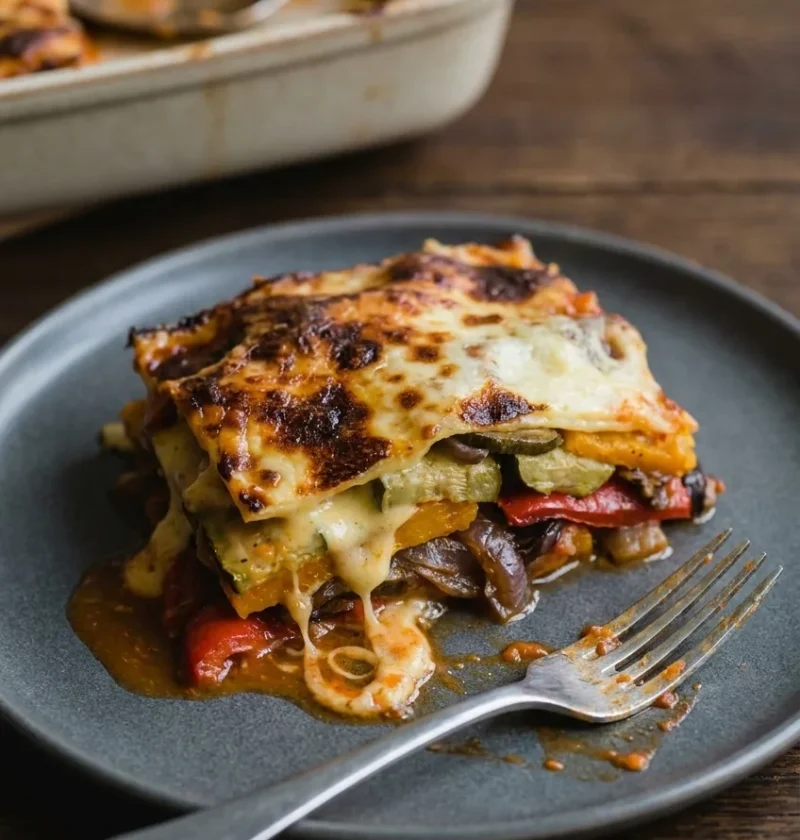
This Hairy Bikers roasted vegetable lasagne from Veggie Feasts layers courgettes, peppers, squash, and a whole roasted garlic bulb with an infused béchamel. It serves 5 at around 700 calories and takes just under two hours with a 45-minute roast and a 30-minute bake.
The headnote calls this “a great dish for a weekend feast” and it is designed to be assembled hours ahead, which is the real strength of a vegetable lasagne over a meat one since nothing spoils sitting in the fridge. The béchamel is infused before the roux even starts, so the white sauce carries more depth than a basic milk-and-flour version.
Roasting the vegetables for a full 40 to 45 minutes is the step that separates this from every soggy vegetable lasagne you have ever eaten, because the high heat drives out the water that would otherwise leak into the layers during baking. The recipe spreads them across two trays so nothing steams, and the garlic cloves roast in their skins until soft enough to squeeze out and mash into the vegetables.
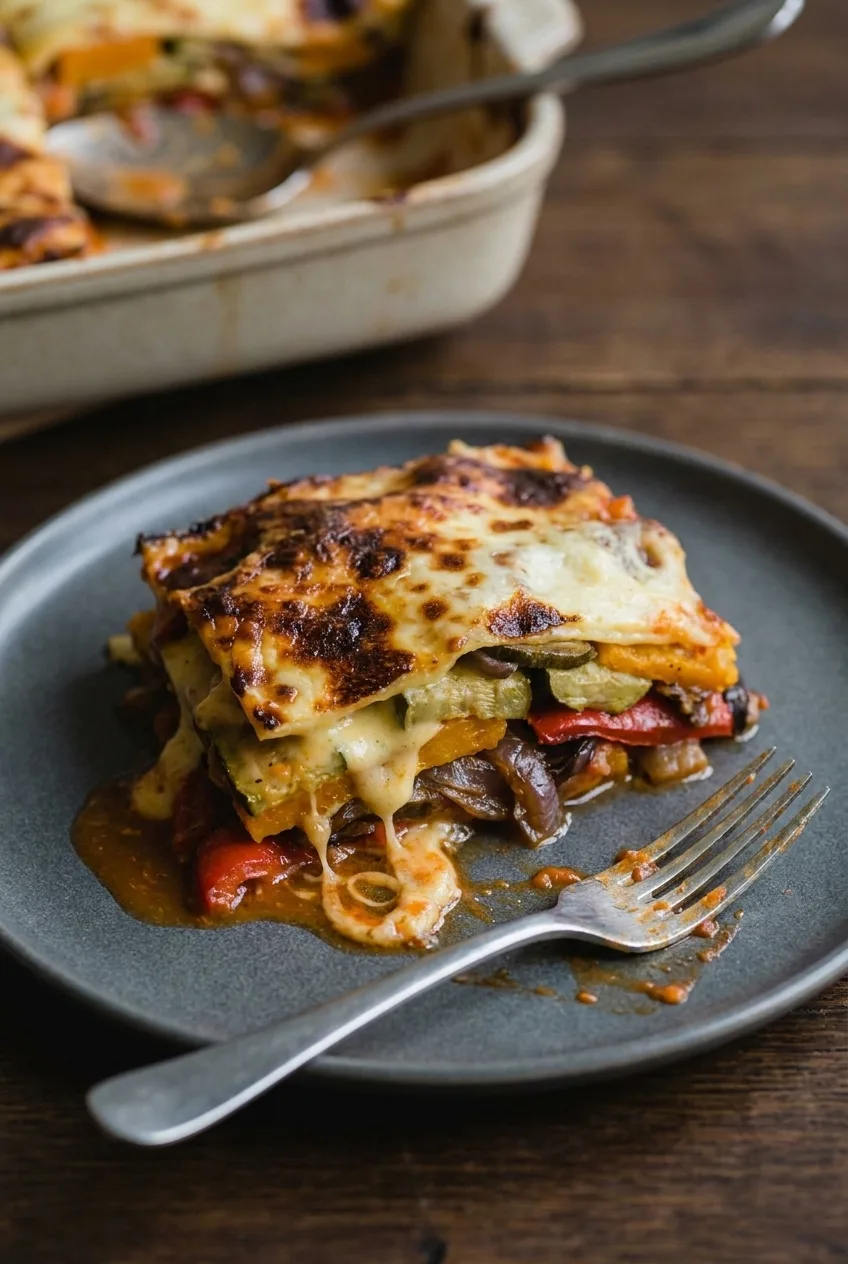
Hairy Bikers Roasted Vegetable Lasagne Recipe
Description
Courgettes, peppers, squash, and red onions roasted with a whole garlic bulb until caramelised, then layered with a clove-and-mace infused béchamel, tomato sauce, and melted mozzarella. A vegetarian lasagne built to be made ahead and reheated without losing its structure.
Ingredients
For the Roast Vegetables:
For the Béchamel Sauce:
To Assemble:
Instructions
- Roast the vegetables: Preheat the oven to 200°C/Fan 180°C/Gas 6. Spread the onions, peppers, squash, courgettes, and garlic cloves across 2 roasting trays and season well. Sprinkle with the Italian herbs, drizzle with olive oil, and roast for 40 to 45 minutes, turning once or twice, until everything is tender and lightly browned. Leave to cool, then squeeze the garlic flesh from the skins and mash it into the vegetables.
- Make the infused béchamel: Heat the milk with the onion slice, cloves, bay leaves, and mace until it reaches boiling point, then remove from the heat and leave to cool before straining. Melt the butter in a clean pan, stir in the flour, and cook for a couple of minutes. Add the strained milk a ladleful at a time, stirring until each addition is fully combined before adding the next. The finished sauce should be smooth and pourable.
- Assemble the layers: Spread a small ladleful of tomato sauce over the base of a 30 x 20cm ovenproof dish, then a large ladleful of béchamel. Lay 3 lasagne sheets on top, followed by more tomato sauce, a third of the roasted vegetables, and a few torn basil leaves. Ladle over more béchamel and top with another 3 sheets of lasagne.
- Repeat and bake: Build two more layers of vegetables, sauce, and pasta in the same order, then pour the remaining béchamel over the final layer of lasagne sheets. Arrange the torn mozzarella on top and sprinkle with the grated cheese. Bake for about 30 minutes until the top is brown and bubbling, then leave to stand for at least 10 minutes before cutting.
FAQs
Why roast the vegetables instead of frying them?
Roasting at 200°C for 40 to 45 minutes drives out the water that sits inside courgettes, peppers, and squash, which is the single biggest reason home vegetable lasagnes turn out soggy. Frying or steaming keeps that water trapped inside, and it all leaks out during the 30-minute bake and pools at the bottom of the dish.
The recipe uses two trays rather than one so the vegetables roast rather than steam, because overcrowding has the same effect as frying. The high heat also caramelises the natural sugars in the squash and onions, which gives the finished lasagne a sweetness that raw or steamed vegetables cannot match. And their moussaka fights the same water with salt instead, since the aubergine slices sit in a colander before they go anywhere near the pan.
Can I use aubergine or lentils instead?
Aubergine works brilliantly, and the Everyday Winners cookbook has a completely different aubergine lasagne called Lasagne alla Norma that uses roasted aubergine rounds with a ricotta filling, a tomato sauce spiced with cinnamon, and no béchamel at all. It is Sicilian-inspired and has a lighter, sharper flavour than this one.
Puy lentils or green lentils can replace some of the vegetables if you want extra protein, and they hold their shape well during baking. Cook them until just tender before adding them to the layers, since dried lentils will not cook through in the oven.
Mushrooms, sweet potato, and butternut squash are all good swaps too, but roast any hard vegetables first to remove the moisture. And for a different vegetarian filling again, their spinach and ricotta lasagne skips béchamel for ricotta and a passata spiked with cinnamon.
How do I make this vegan?
The recipe includes a vegan tip directly from Hairy Bikers: make the béchamel with olive oil instead of butter and use plant-based milk, then replace the mozzarella and Parmesan topping with a mix of breadcrumbs and dried herbs. The breadcrumb crust goes crispy and golden in the oven and gives you the crunch that melted cheese normally provides.
Oat milk works best for the béchamel because it has a creamier body than almond or soy, and a tablespoon of nutritional yeast stirred into the sauce adds a savoury cheesy flavour without any dairy. The roasted vegetables and tomato sauce are already vegan, so the only layers that change are the white sauce and the topping.
Can I assemble this the day before?
Yes, and the headnote says this is designed to be “put together earlier in the day, ready to pop in the oven when you want.” The assembled lasagne keeps in the fridge for up to 24 hours covered tightly with cling film, and the overnight rest actually helps the dried pasta sheets soften as they absorb the sauces.
Add 10 to 15 minutes to the baking time because the dish starts cold from the fridge, and make sure the centre is bubbling before you take it out. The béchamel thickens as it chills, so the layers hold together better after a rest than they do when assembled and baked straight away. The beef lasagne follows the same make-ahead logic, and the leek lasagne brings both down to 354 calories by swapping the pasta sheets for blanched leek leaves.
What does the infused béchamel actually do?
Most vegetable lasagne recipes use a basic white sauce made from butter, flour, and plain milk, which tastes fine but adds nothing beyond creaminess. This recipe heats the milk with a slice of onion, four cloves, two bay leaves, and two blades of mace before straining it, and those aromatics give the sauce a warm, almost spiced background that lifts the whole dish.
The cloves and mace are the key because they add a gentle warmth without any identifiable spice flavour, and the bay leaves bring the same herbal note that they add to a meat ragù. It takes an extra 10 minutes but the difference is noticeable, especially in a vegetarian dish where the sauce has to do more of the heavy lifting without any meat to carry the flavour. So the same infusion turns up in their cauliflower cheese, where bay, mace and peppercorns steep in the milk before the roux starts.