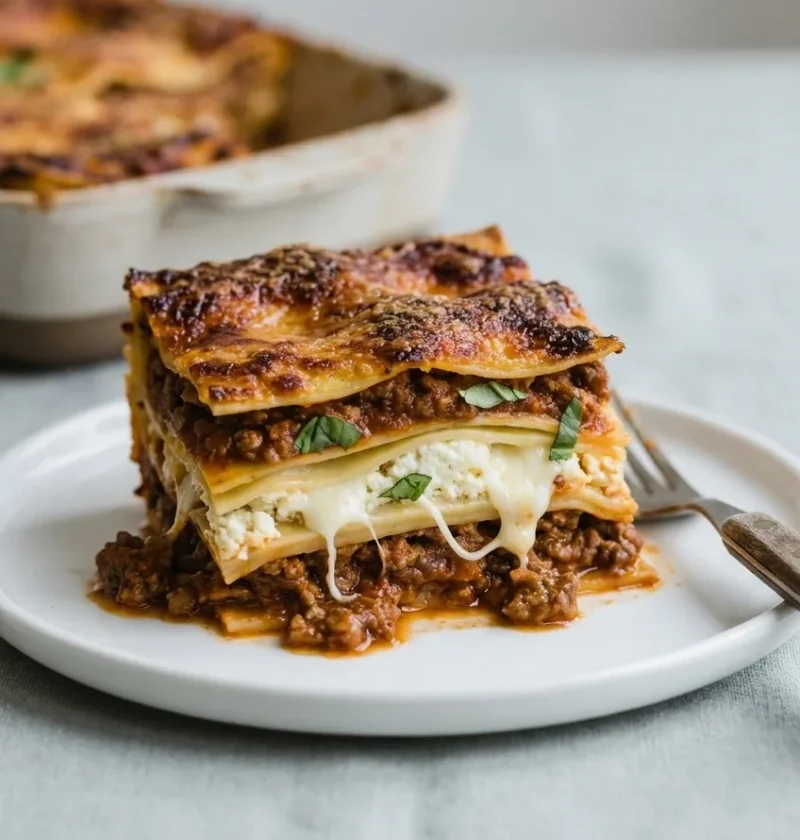
This Hairy Bikers beef lasagne recipe from British Classics drops the béchamel and layers ricotta, mozzarella, and Parmesan between the sheets instead at around 780 calories per serving. It takes about two and a half hours with a one-hour stovetop ragù and a 45-minute bake, and the three-cheese swap means one fewer saucepan to wash.
Si and Dave say they have “gone back to basics” after making lasagne with “meatballs, fish, everything but the kitchen sink.” The ricotta melts into distinct creamy pockets rather than a uniform white layer, and the mozzarella pulls into long strings that hold each slice together when you cut it.
Browning the 750g of mince in small batches is the step that most people rush, but it is the entire foundation of the ragù because the dark crust on the meat is where the savoury depth comes from. Si and Dave say to leave it until a crust has developed before breaking it up, and crowding the pan turns the beef grey and stewy instead.
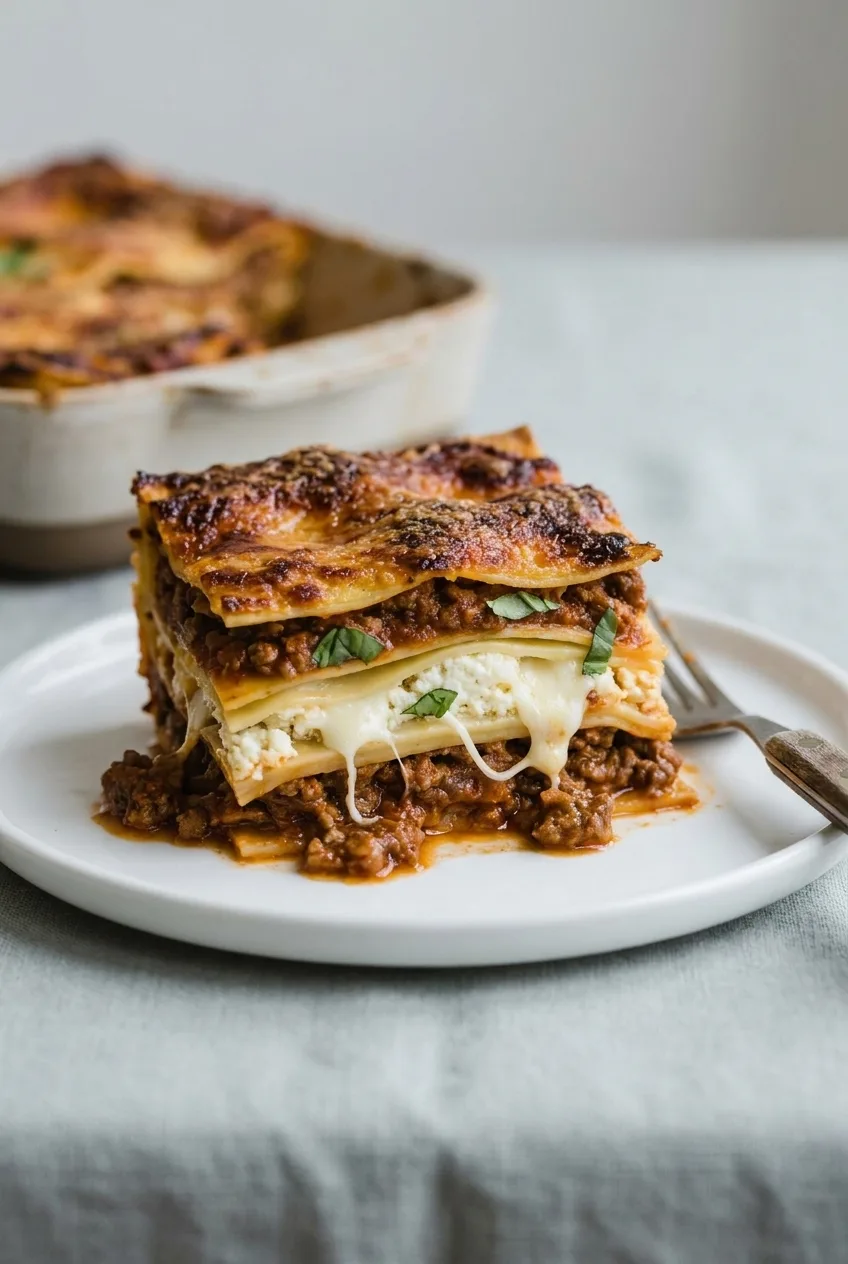
Hairy Bikers Beef Lasagne Recipe
Description
A beef lasagne layered with ricotta, mozzarella, and Parmesan instead of béchamel, built on a one-hour red wine ragù with properly browned mince. Si and Dave call it their back-to-basics version after years of overcomplicating it, and the three-cheese assembly is genuinely faster than making a white sauce from scratch.
Ingredients
For the Meat Sauce:
To Assemble:
Instructions
- Soften the vegetables: Heat a tablespoon of oil in a large pan and add the onions, celery, and carrots. Cook over a gentle heat until the onions are translucent and soft, then add the garlic and cook for a further 3 to 4 minutes.
- Brown the mince: Add the remaining oil to a large frying pan and fry the beef, leaving it until a brown crust has developed on the underside before breaking it up and turning it over. Do this in batches so the pan stays hot and the meat sears rather than stews in its own juices.
- Build the ragù: Add the beef to the vegetables, then turn the heat up high and pour in the red wine. Boil until the wine is reduced by at least half, then add the tomatoes, oregano, and bay leaves with plenty of seasoning. Bring back to the boil, cover, and simmer for an hour. Remove the lid and continue to simmer for another 15 minutes until the sauce has reduced and thickened.
- Assemble and bake: Preheat the oven to 200°C/Fan 180°C/Gas 6. Spread a third of the ragù in a large ovenproof dish, cover with 3 lasagne sheets, then spoon over teaspoons of ricotta, pieces of mozzarella, and torn basil. Repeat twice more, finishing with the remaining cheeses and all the Parmesan on top. Bake for 45 to 50 minutes until the pasta is cooked through and the top is a rich dark brown and bubbling.
- Rest and serve: Leave the lasagne to stand for at least 10 minutes before cutting, since this lets the layers set and the slices hold their shape on the plate.
FAQs
Do I need to pre-cook the lasagne sheets?
No, and Si and Dave use dried sheets straight from the packet in this recipe because the ragù provides enough moisture during the 45-minute bake to cook them through. The key is making sure every sheet is fully covered by sauce on both sides, since any exposed edge will stay hard and crunchy while the rest softens.
If your ragù turned out thicker than you expected, splash a couple of tablespoons of water around the edges of the dish before it goes in the oven. The Proper Lasagne version from Family Favourites adds beef stock to the ragù for this exact reason, which gives the pasta more liquid to absorb without thinning the meat flavour.
Why is my lasagne watery at the bottom?
The ragù was not reduced enough before assembly, which is the single most common lasagne mistake and the reason Si and Dave simmer theirs for a full hour with the lid on, then another 15 minutes with the lid off to drive out the last of the liquid. A properly reduced ragù should be thick enough to hold its shape on a spoon, not pour like a soup.
The ricotta helps here too, because unlike a béchamel it does not release water as it heats. Traditional lasagne with white sauce can weep during baking if the béchamel was too thin, but ricotta holds its structure and keeps the layers drier. If you still get a puddle, rest the lasagne for a full 15 minutes after baking rather than the 10 minutes Si and Dave suggest, since the pasta continues to absorb liquid as it cools.
Can you make lasagne the day before?
Yes, and there is a real argument that it tastes better when you do. Mary Berry’s famous technique is to assemble the full lasagne and then rest it in the fridge for six hours before baking, because the dried pasta softens and absorbs the sauces while it sits. Si and Dave do not mention this step, but I have tested it with their recipe and the slices cut noticeably cleaner after an overnight rest.
Build the ragù and assemble everything in the dish, then cover tightly with cling film and refrigerate for up to 24 hours. Add 10 to 15 minutes to the baking time because the dish starts cold, and check that the centre is bubbling before you take it out.
Can you freeze homemade lasagne?
Si and Dave suggest making double the ragù and freezing half for another time, which is the smartest approach because the sauce takes an hour and the assembly only takes 10 minutes. A fully built lasagne also freezes well for up to three months if you wrap the dish tightly in cling film and then a layer of foil.
Defrost overnight in the fridge and add 10 to 15 minutes to the baking time so the centre heats through properly. The ricotta and mozzarella hold up better after freezing than a béchamel does, since white sauce can split and go grainy when reheated.
The roasted vegetable lasagne also freezes well and makes a good vegetarian option for the second batch. The Celebratory Lasagne from Mediterranean Adventure freezes particularly well because the meatballs and sausage keep their texture, so it is worth building a double batch of that version too if you are feeding a crowd.
How do I make lasagne with fewer calories?
The leek lasagne from the Hairy Dieters replaces the pasta sheets entirely with blanched leek leaves, which cuts the carbs and drops the calorie count significantly while keeping the same beef ragù underneath. The leeks are simmered for five minutes until very tender and then layered flat in the dish exactly where the pasta would go.
Si and Dave also published a lighter roast vegetable version in Eat to Beat Type 2 Diabetes that comes in at just 241 calories per serving when built with leek sheets. For a quick fix without changing the whole recipe, swap the regular mince for lean mince and use half the mozzarella, which brings this version down to roughly 580 calories without losing the three-cheese character.