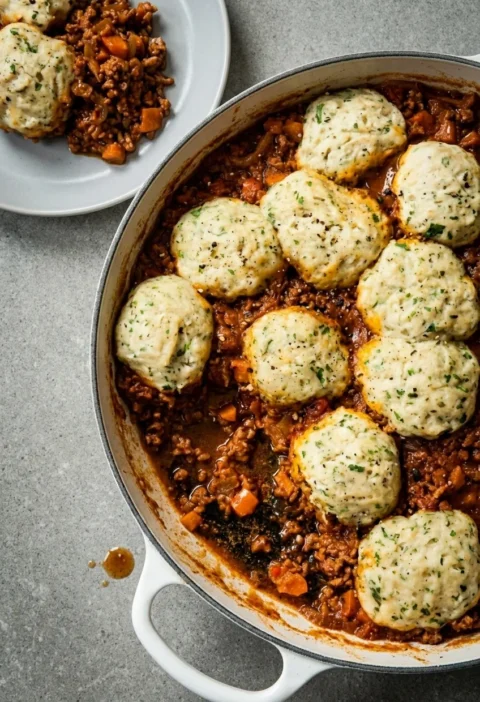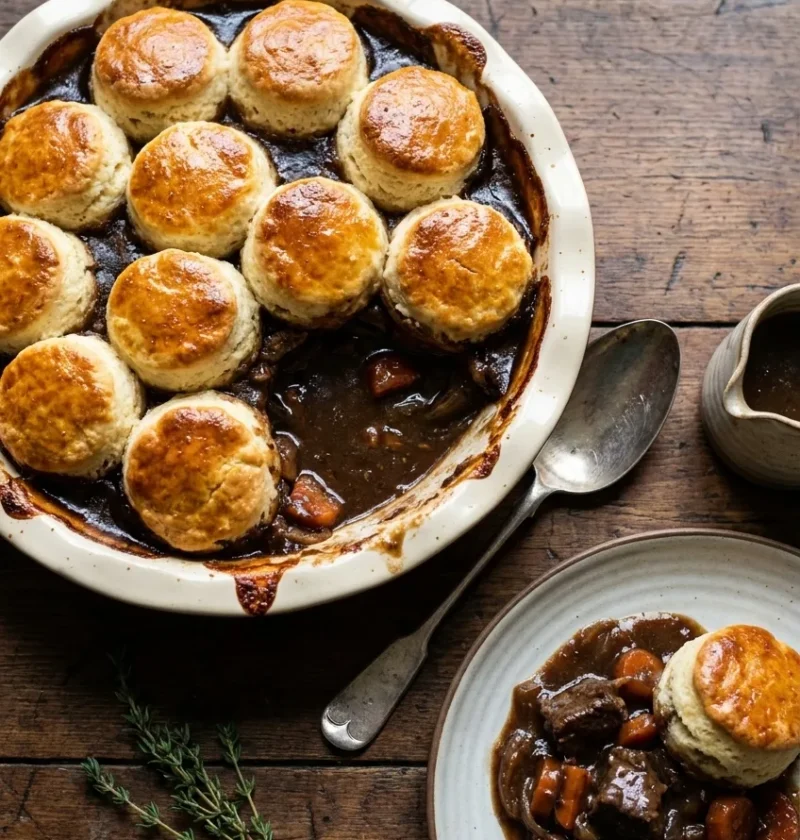
The venison is not browned first in Hairy Bikers venison casserole, and that is deliberate. A kilo of shoulder or leg goes into the pot raw, braises in ale for the best part of two hours, then gets a scone cobbler topping. The recipe is called rich venison cobbler in Perfect Pies and serves six.
Their reasoning is the opposite of what most casseroles tell you. They write that the meat stays more succulent if it is bubbled in the sauce from raw, so it goes into the pot uncooked.
You need two dishes for this, a flameproof casserole for the braise and a 2-litre pie dish for the cobbler stage. The beer decides how dark it comes out, with stout giving a deeper result and real ale a lighter one.
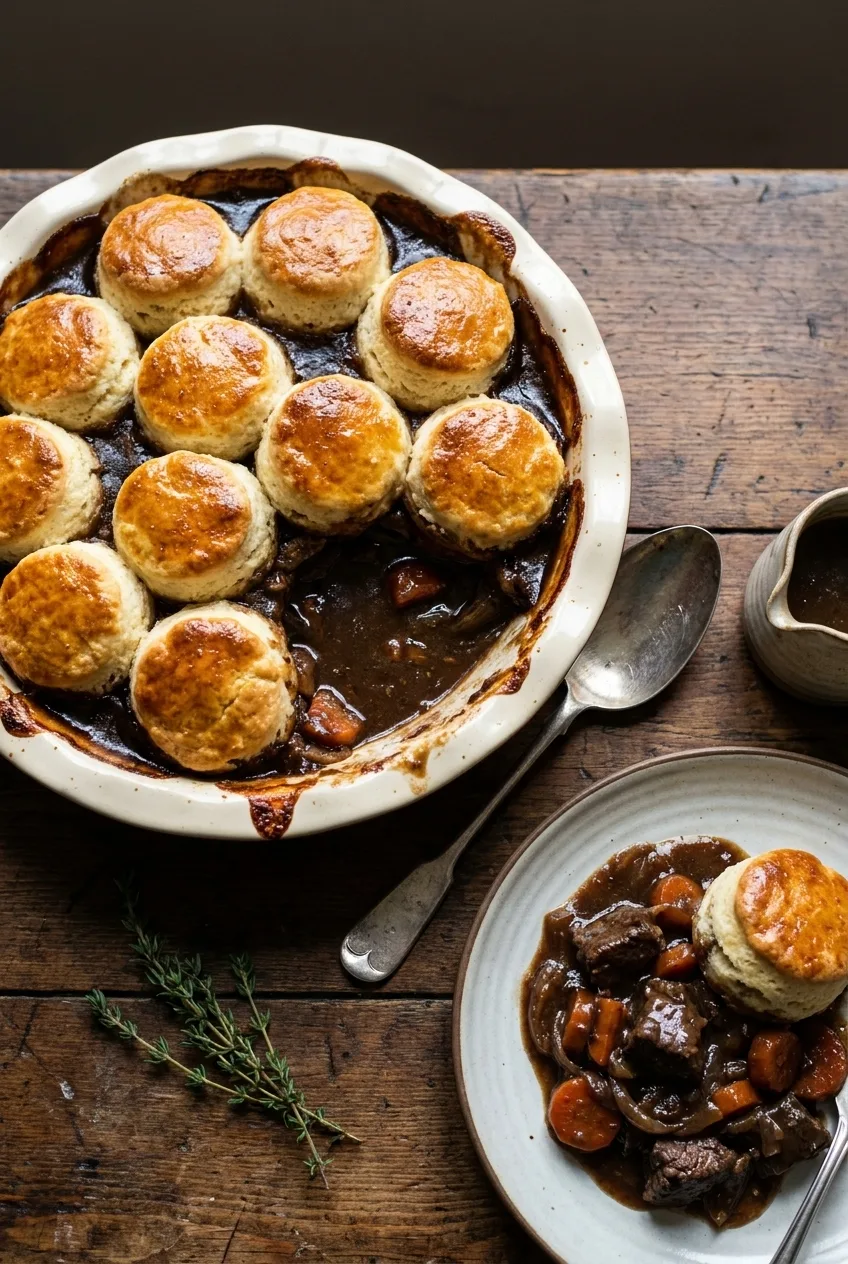
Hairy Bikers Venison Casserole
Description
Onion, celery and carrot soften for ten minutes before flour and mustard powder go in. Ale and water follow, then the raw venison with redcurrant jelly and thyme. Scone cobbles are cut with a biscuit cutter and laid over the top before the final bake.
Ingredients
For the casserole
For the cobbler topping
Instructions
- Heat the oven: Preheat to 180°C, fan 160°C, gas 4.
- Soften the vegetables: Heat the oil in a medium flameproof casserole dish and fry the onions, celery and carrot gently for 10 minutes, until the onion has softened and lightly coloured. Stir occasionally.
- Add flour and mustard: Stir in the flour and mustard powder and cook for a few seconds, then slowly stir in the ale and water.
- Add the venison raw: Add the venison, redcurrant jelly, thyme and bay leaves and stir. Season with a little salt and lots of coarsely ground black pepper.
- Braise: Bring to a gentle simmer, stirring occasionally, then cover with a lid and transfer to the oven. Cook for 1¾ to 2 hours, until the venison is very tender and the sauce is thick.
- Season it: Check the seasoning and add a little lemon juice to lift the richness.
- Make the topping: Turn the oven up to 200°C, fan 180°C, gas 6, and spoon the venison into a 2-litre pie dish. Put the self-raising flour and salt in a large bowl and rub in the butter until it looks like breadcrumbs. Add the milk, stirring constantly, until it comes together as a soft, spongy dough.
- Cut the cobbles: Turn the dough onto a floured surface and roll to about 2cm thick. Cut out 6cm rounds with a biscuit cutter, kneading and re-rolling as you go.
- Bake: Lay the cobbles over the filling so they nearly cover it and brush with milk or beaten egg. Bake for 30 minutes, until golden brown and the filling is hot.
FAQs
Why is the venison not browned first?
Because venison has almost no fat running through it. A hot pan pulls moisture out and there is nothing marbled through the meat to replace it, so you end up with dry chunks in a good sauce.
Beef is different, which is why their braised steak with gravy browns two steaks at a time before anything else goes near the pan.
Ale or stout?
Both work and it changes the finished dish. A darker beer or stout gives a deeper, richer result, and they say it is just as delicious with real ale.
Five hundred millilitres goes in with 250ml of water, so the beer is doing a lot of the flavouring. Choose something you would happily drink, since a harsh beer stays harsh after two hours.
What is a cobbler topping?
Scone dough, cut into rounds and laid over the filling so they nearly cover it. The rounds are called cobbles, which is where the name comes from.
It is not pastry and it does not go on in a sheet. Gaps between the cobbles let steam out, which is why the filling stays thick rather than watering down. Their chicken cobbler uses the same idea over a lighter filling.
Can I make it ahead?
The braise yes, the topping no. They say you can cool the venison mixture and keep it in the fridge to finish the next day.
The topping has to be made shortly before baking because it uses self-raising flour, which starts working the moment the milk goes in. Make it early and the cobbles will not rise properly.
What does the redcurrant jelly do?
It balances the venison, which is a strong, slightly gamey meat. Two heaped tablespoons goes in at the start and cooks down into the sauce rather than tasting sweet.
The lemon juice at the end does the opposite job, cutting through after two hours of reducing. Both are worth doing, since the dish is built around richness and needs something on either side of it.