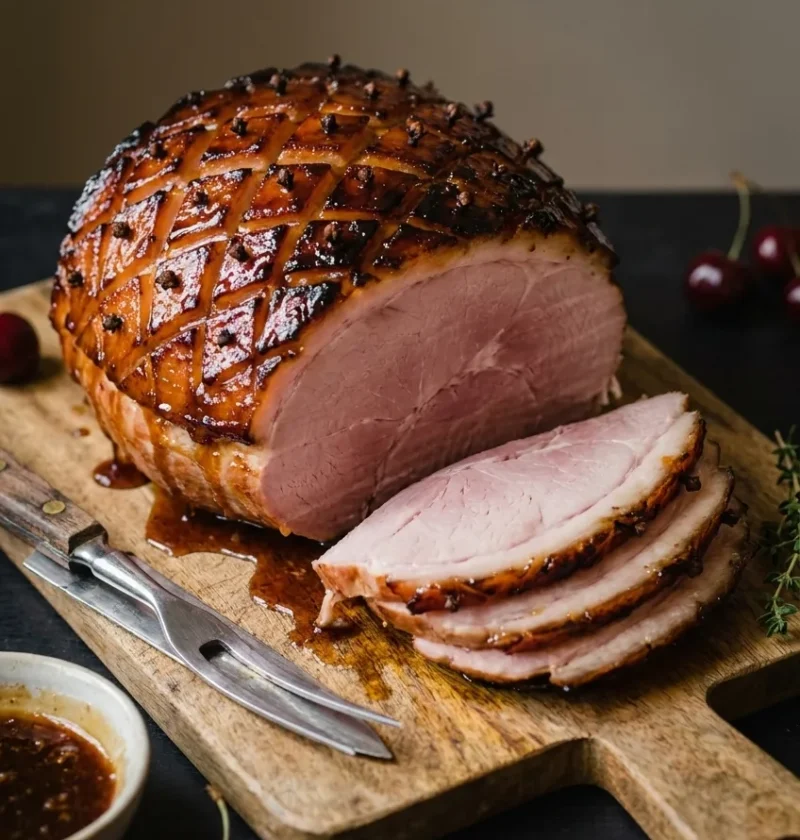
This Hairy Bikers gammon ham recipe from British Classics simmers a 2.5kg joint for two and a half hours before glazing it with bourbon and cherry conserve. It serves 8 at around 420 calories per slice, and the whole thing takes about three and a half hours.
The headnote says this was “a Christmas essential in both our houses” and the glaze is what lifts it above every standard honey-and-mustard version. That glaze starts with cherry conserve, fresh ginger, cinnamon, and brown sugar cooked down into a thick coating that turns the fat deep amber brown.
The joint boils first in water with a clove-studded onion, bay leaves, allspice, and thyme, which seasons the meat through before the glaze touches it. Roasting from raw without that boil is why most home gammons come out dry, salty, and tough.
Hairy Bikers Gammon Ham Recipe
Description
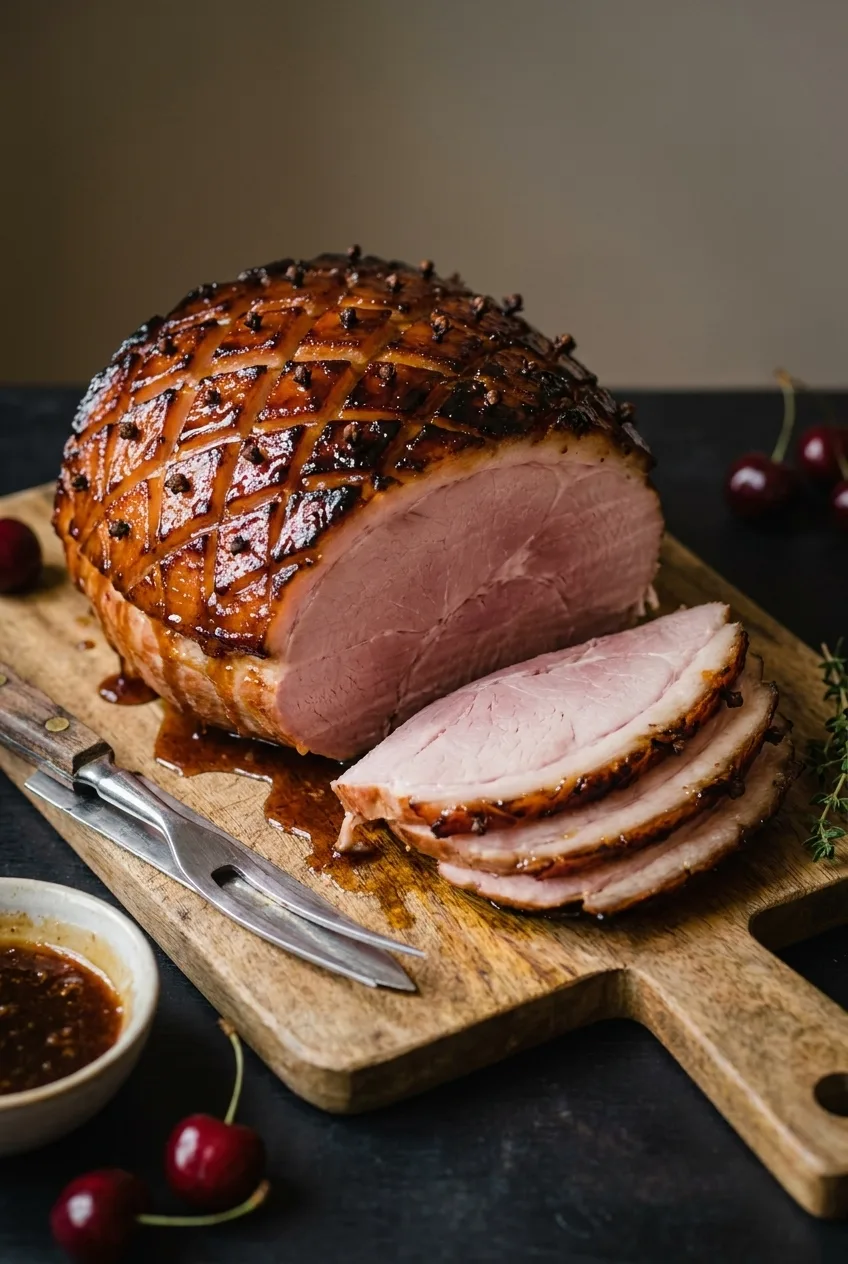
A gammon joint simmered in aromatic water until tender, then stripped of its rind, scored in diamonds, studded with cloves, and roasted under a bourbon and cherry conserve glaze until dark and sticky. Four different glaze options are compared in the FAQs below.
Ingredients
For the Boil:
For the Glaze:
Instructions
- Boil and drain: Put the gammon in a large saucepan, cover with cold water, and bring to the boil. Drain the water and rinse off any white starch from both the joint and the pan, then return the gammon to the pan and cover with fresh water.
- Simmer with aromatics: Stud the onion with the 6 cloves and add it to the pan with the bay leaves, thyme, allspice, carrots, celery, and peppercorns. Bring to the boil, then reduce the heat and simmer with the lid on for 2 to 2½ hours until cooked through. The internal temperature should reach 68°C if you have a meat thermometer.
- Prepare for glazing: Preheat the oven to 200°C/Fan 180°C/Gas 6. Cut off the string and carefully remove the outer rind, leaving at least half the thickness of fat attached to the joint. Score a diamond pattern into the fat and press a clove into each corner.
- Make the glaze: Blend the cherry conserve until smooth, then put it in a small pan with the bourbon, ginger, sugar, and cinnamon. Bring to the boil and simmer for 15 minutes until it reduces enough to coat the back of a spoon. Brush the glaze over the joint, making sure you use it all.
- Roast and rest: Place the gammon in a roasting tin and roast for 20 to 25 minutes until well browned and sticky. Rest for 15 minutes before carving into slices.
FAQs
How long do you boil gammon before roasting?
The general rule is 20 minutes per 500g, so a 2.5kg joint needs about an hour and 40 minutes to two hours of gentle simmering. This recipe pushes it to two and a half hours because the aromatics in the water need time to flavour the meat all the way through.
The boil draws out excess salt too, which is why the method starts with a plain-water blanch before the aromatic simmer. Smoked gammon in particular can come out salty even after hours of cooking if you skip that first drain.
Can I make gammon in a slow cooker?
Yes, and the low, even heat of a slow cooker keeps the meat tender without any risk of boiling too hard. Cook on low for 6 to 8 hours or high for 4 to 5 hours with the aromatics and enough water to cover the joint.
The glaze still needs the oven though, because a slow cooker cannot caramelise the sugar and fat. Transfer the cooked joint to a roasting tin, score the fat, brush on the glaze, and blast it at 200°C for 20 to 25 minutes. The Family Favourites version poaches the joint in ginger beer instead of water, and that works in a slow cooker too.
What is the best glaze for gammon?
This recipe uses bourbon and cherry conserve with fresh ginger and cinnamon, which gives the deepest flavour of the four options across the cookbooks. The BBC version uses just honey and English mustard mixed together, which is faster and sharper with less sweetness.
The Family Favourites version uses tamarind paste, dark brown sugar, and ground ginger for a sticky, almost treacly finish with grilled pineapple. The Mums Know Best version poaches the gammon in orange juice and glazes with marmalade, honey, and wholegrain mustard. It feeds up to 20 from a 6kg joint and is the most festive of the four.
Do you need to soak gammon before cooking?
Modern curing methods mean most supermarket gammon joints no longer need an overnight soak, but it is worth checking the label or asking the butcher. Traditionally cured joints from a butcher or farm shop are more likely to need soaking in cold water for 12 to 24 hours to draw out the salt.
If you are unsure, cut a small slice from the edge of the raw joint and fry it in a dry pan. Taste it, and if it is very salty, soak the joint overnight in cold water in the fridge, changing the water once halfway through. The initial blanch in the method also helps, but it will not fix a heavily salted joint on its own.
Can you cook gammon the day before?
Yes, and many people prefer it because the joint carves more neatly when cold. Boil and glaze the gammon as normal, then let it cool completely before wrapping it in foil and refrigerating overnight. Bring it to room temperature for 30 minutes before carving, or reheat slices gently at 160°C for 10 minutes.
The cooking liquor from the boil makes a rich stock for soup once the fat is skimmed off. The headnote says this was a Christmas essential, and building it the day before is how most families handle the rush. For the traditional side dish, the pease pudding from Meat Feasts was designed to cook in the same pot as this joint.