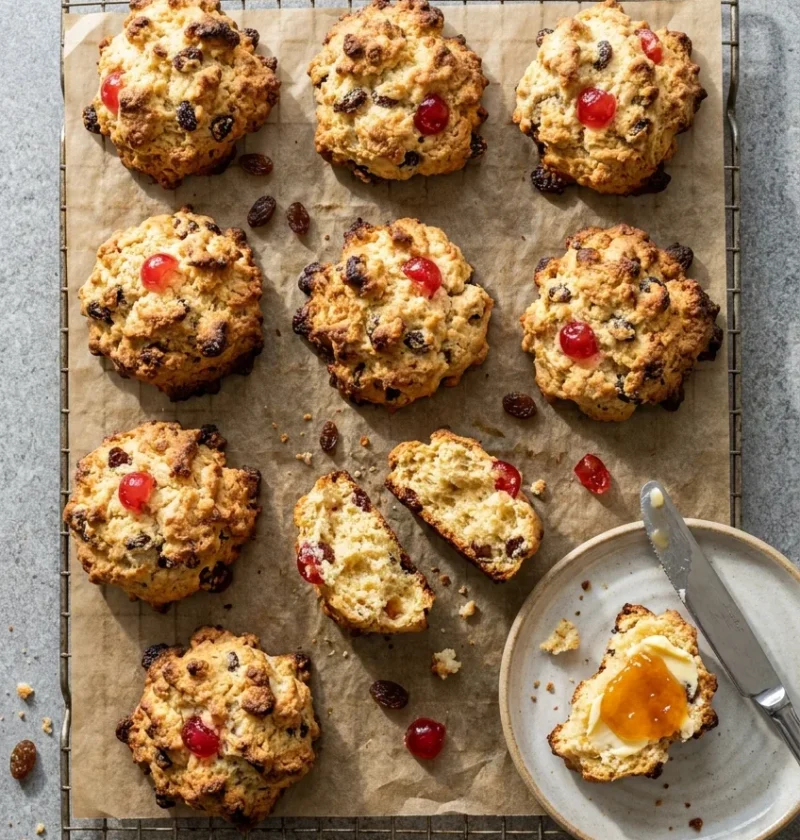
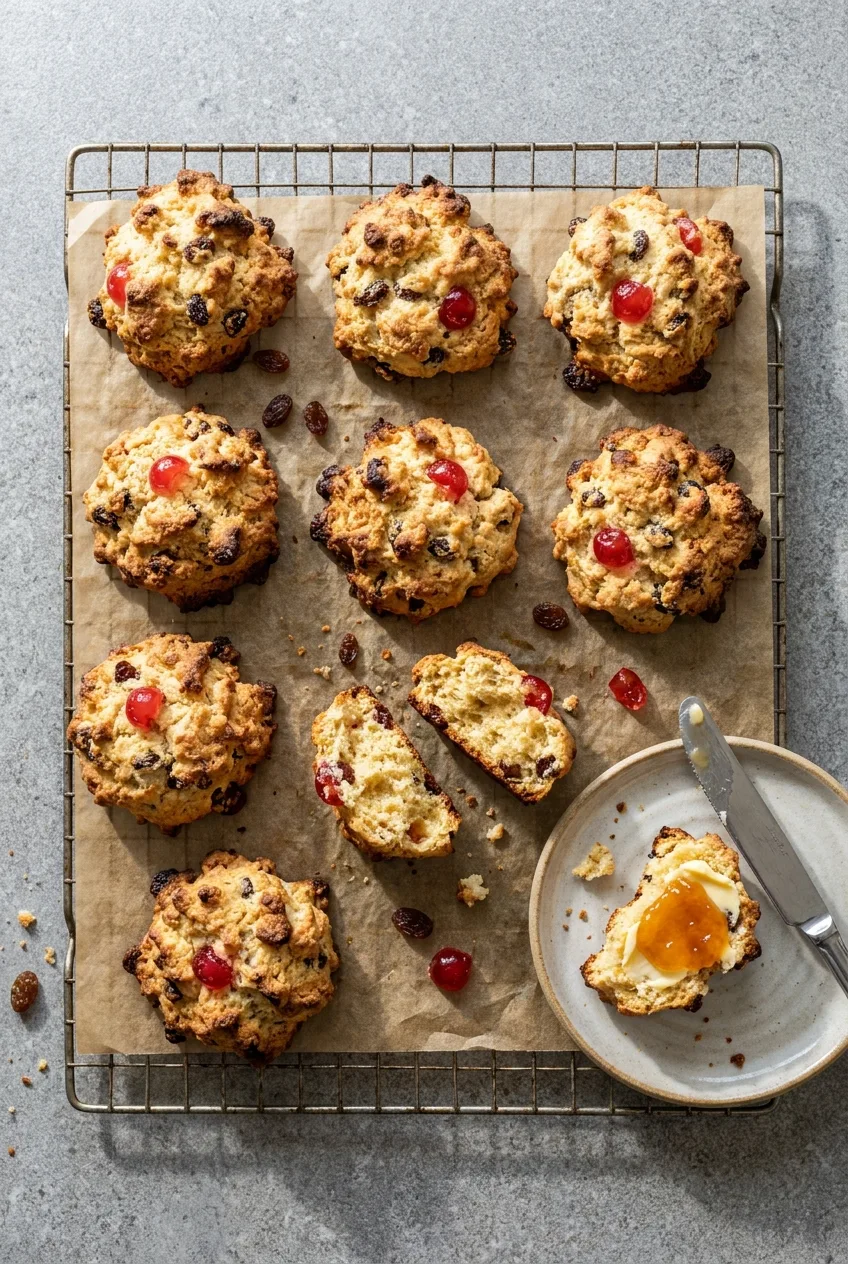
Fifteen minutes of mixing and twenty in the oven is all the Hairy Bikers rock cakes ask for. One bowl makes eight craggy buns full of sultanas and glacé cherries, at about 345 calories each.
Si bakes these thinking of “the tiny house in Team Valley, near Gateshead, where my Auntie Hilda and Uncle George lived”. Her rock buns were second to none, he writes, so this recipe from their comfort food book carries her memory.
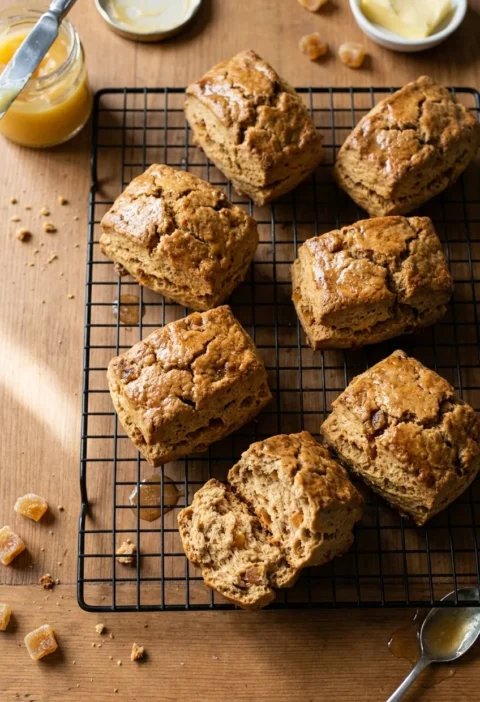
The mounds must look craggy, and the book means it, because smooth rock cakes are wrong rock cakes. If yours look too tidy on the tray, rough them up with a fork before they bake.
Hairy Bikers Rock Cakes Recipe
Description
Rubbed-in butter, light brown sugar and a mix of dried fruit and cherries come together with egg and milk into a firm, sticky dough. Eight rough mounds go straight onto the tray, so there is no rolling and no cutting.
Ingredients
Instructions
- Get ready: Preheat the oven to 180°C/Fan 160°C/Gas 4, then line a baking tray with baking parchment.
- Rub in the butter: Mix the flour, baking powder and a generous pinch of salt in a bowl. Add the butter and rub it in until the mixture looks like fine breadcrumbs.
- Make the dough: Stir in the sugar, the raisins or sultanas and the cherries. Whisk the egg with the milk or buttermilk, then stir it in to form a firm but sticky dough.
- Shape the mounds: Divide the mixture into 8 rough mounds on the tray. They should look craggy, so rough them up with a fork if they seem too smooth.
- Bake: Bake for 15-20 minutes until golden brown. Do not worry if they still feel soft, because they firm up as they cool.
- Cool and serve: Move the buns to a rack, then eat them warm or cold, plain or broken up with butter and jam.
FAQs
How is the Mums Know Best version different?
That one is the school cookery classic, and the book calls rock cakes “scones with attitude”. It uses 225g of flour to this recipe’s 250g, and less butter at 100g. The sugar is 75g of caster instead of the brown, with 100g of plain mixed fruit and no cherries.
It bakes hotter too, at 200°C rather than 180°C, then the cakes get dredged in caster sugar straight from the oven. The book says to eat them still warm, which is when they taste their best. And their Welsh cakes get the same sugar coating while hot, though they cook on a griddle rather than in the oven.
Why are they called rock cakes?
The name comes from how they look, not how they eat, because the rough mounds bake into shapes like little rocks. The craggy edges catch the oven heat and brown deepest, which gives them their character.
A proper rock cake still eats soft and crumbly inside. If one ever eats like an actual rock, it was overbaked or overworked, not made wrong by design.
Why are they still soft when they come out?
Because that is exactly right, and the book says so, since the buns firm up as they cool. Pulling them at golden brown keeps the middles tender.
Waiting for them to feel firm in the oven means dry rock cakes ten minutes later. The signs of done are the colour and the darker craggy edges, not a firm press.
What is the proper way to eat a rock bun?
Uncle George had the answer, because Si writes that he always took the top off his bun and filled it with Auntie Hilda’s home-made apricot jam. The book itself suggests them plain, or broken up and spread with butter and jam.
The Mums version goes sugared and warm instead, so both traditions are covered. For the tea table beside them, their eccles cakes carry the same old-fashioned charm.
Should I use milk or buttermilk?
The book allows both, so it is your choice to make. Buttermilk adds a slight tang and bakes a touch more tender, while ordinary milk keeps them classic.
Either way, the Mums book says they taste best still warm, while this one happily serves them warm or cold. If you want a fruit bake that improves with keeping instead, their bara brith gets better for days.