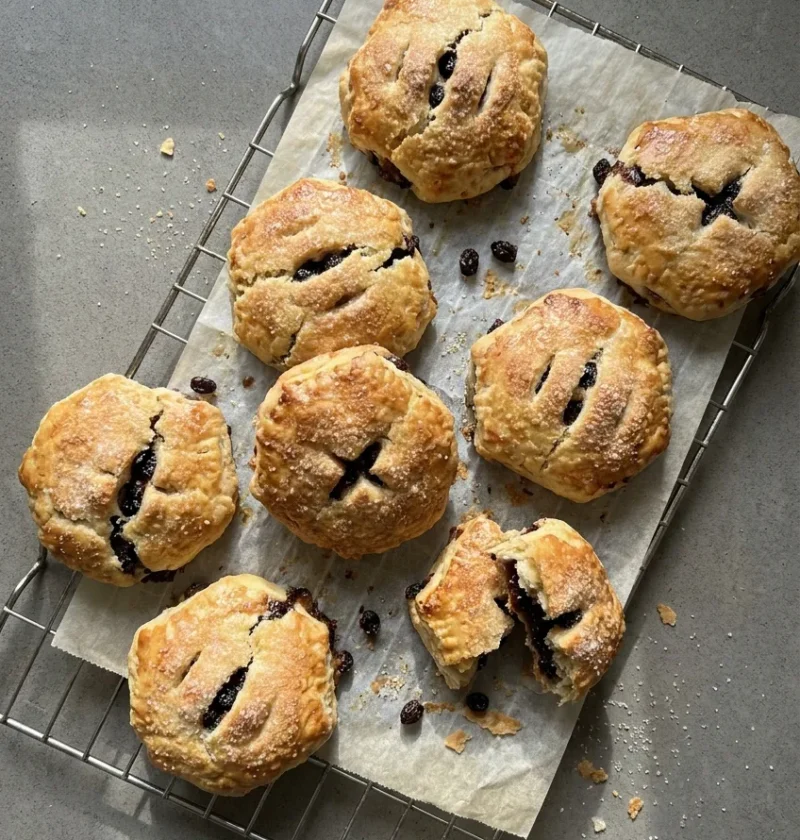
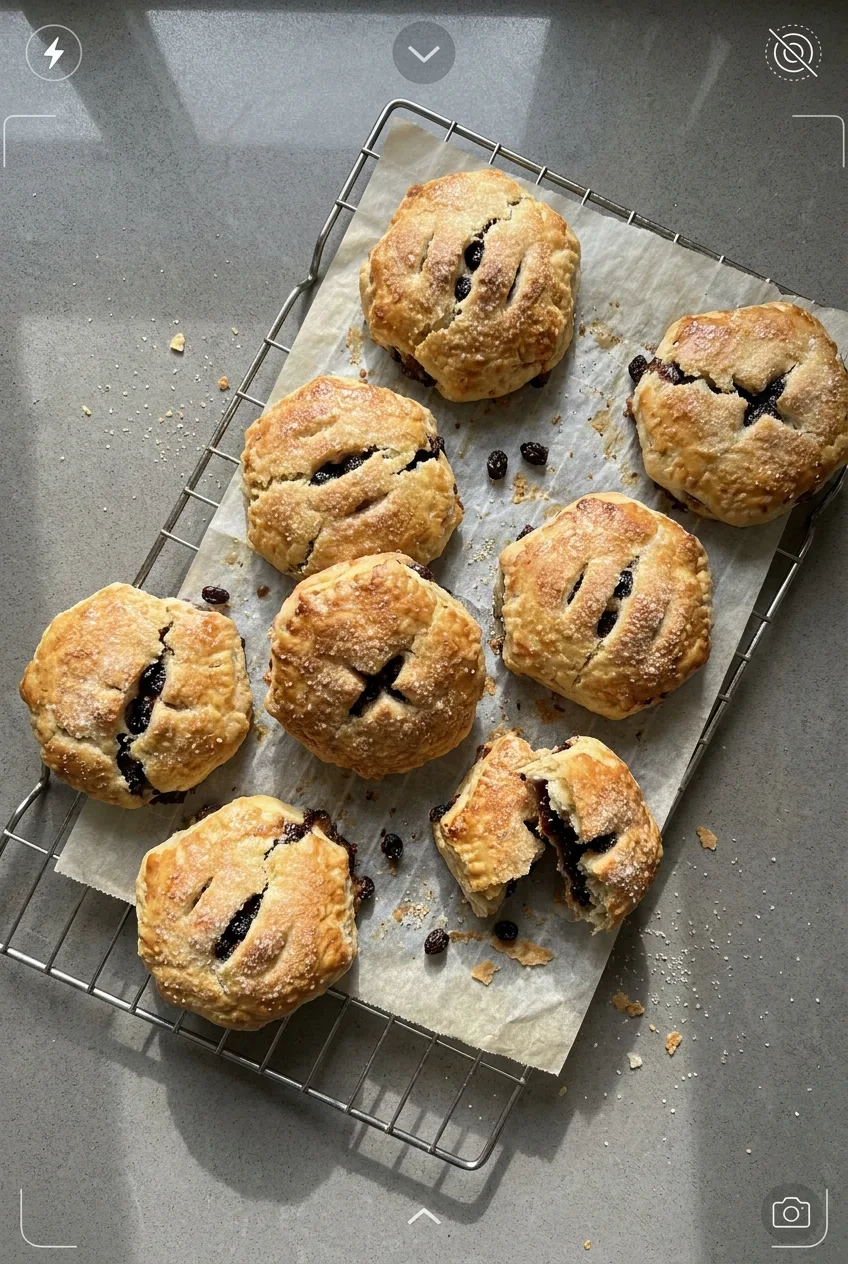
This Hairy Bikers eccles cakes recipe comes from their Perfect Pies cookbook, and it makes 10 to 12 little currant pastries. Each one is about 250 calories, and the whole batch is done in 45 minutes.
The same recipe also appears word for word in their Mums Know Best book, so they clearly trust it. “You’re in for a treat,” they promise, especially if you have only ever eaten the shop-bought kind.
The step that matters most is rolling each cake twice, because the filled purses get flipped over and rolled flat again. That second roll pushes the currants out to the edges, so every bite gets fruit.
Hairy Bikers Eccles Cakes Recipe
Description
Melted butter binds the currants, peel, spice and lemon zest, and ready-made puff pastry does the wrapping. A frothy egg white glaze under a sprinkle of caster sugar bakes into the crackly top these are famous for.
Ingredients
For the filling
For the pastry
Instructions
- Make the filling: Gently melt the butter in a saucepan, then stir in the sugar, currants, mixed peel, spice and lemon zest. Set it aside to cool, and preheat the oven to 200°C/Fan 180°C/Gas 6.
- Cut the pastry: Roll the pastry out to about 4mm thick on a floured surface, then cut 10-12 rounds with a 10cm cutter. Place a tablespoon of filling in the centre of each.
- Form the purses: Beat the egg white until slightly frothy, then brush a little around each pastry edge. Bring the pastry up around the filling and press the edges together, and do not worry if they look wonky.
- Roll them again: Turn each cake seam-side down on the floured surface and roll it gently into a circle of about 8.5cm. Move them to a lined baking tray and score each top 3 or 4 times with a sharp knife.
- Glaze and bake: Brush the cakes with more egg white and sprinkle about half a teaspoon of caster sugar over each. Bake in the centre of the oven for 18-20 minutes until risen, crisp and golden.
- Serve warm: Cool them for a few minutes, because they are at their best served warm.
FAQs
Why are eccles cakes called dead fly pies?
Both of their books use the nickname, because that is what generations of British kids called them. The dark currants showing through the thin pastry earned it honestly.
Si and Dave say they used the name themselves as lads, so it appears in the books with affection. The proper name comes from Eccles, the town near Manchester the cakes are named after. And Manchester gives its name to a school dinner pudding as well, which their Manchester tart flapjack squares rebuild with raspberry jam, vanilla custard and coconut.
Why do the tops get scored with a knife?
The 3 or 4 slashes are a working feature, because steam builds inside the sealed purse as the filling heats. Without an escape route, the pastry bursts wherever it is weakest.
The cuts also make the classic eccles look, since the dark filling peeks through the golden pastry. Keep them shallow, so the filling stays put during the bake.
Why egg white instead of whole egg for the glaze?
Because the two glazes do different jobs, and this bake wants crunch rather than shine. Egg white bakes into a crisp, almost brittle surface, which grips the caster sugar in a crackly layer.
A whole egg or yolk glaze would brown glossy and soft instead. Froth the white slightly first, since that makes it brush thinner and more evenly.
Is ready-made puff pastry really allowed?
The books say so themselves, because both versions list a 500g block of ready-made puff without apology. Puff pastry takes hours to make well, and the filling is where these cakes earn their flavour.
The one job left to you is the 4mm rolling thickness, which matters more than it looks. Thicker pastry stays doughy under the filling, while 4mm crisps right through.
How long do eccles cakes keep?
A couple of days in an airtight container, according to the book, and they warm up beautifully after. A few minutes in a hot oven brings the pastry back to crisp.
They suit a cup of tea warm, or a quick pudding with cream or ice cream. For a proper tea table beside them, their bara brith slices and butters like it was made for the job, and their custard tart finishes the spread. And at Christmas, their orange and cranberry mince pies sit two recipes earlier in Perfect Pies, with the same currants, peel and mixed spice.