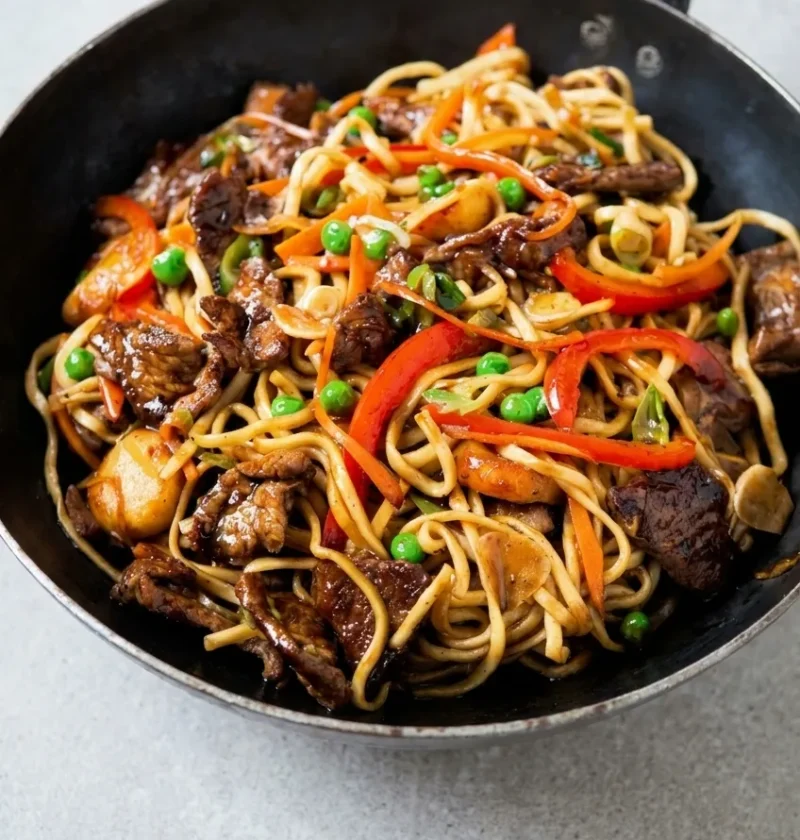
Chow mein just means fried noodles, so Hairy Bikers pork chow mein is exactly what the name says. The recipe is in Meat Feasts, where 500g of pork tenderloin feeds four at around 600 calories in 35 minutes.
Si and Dave write in Meat Feasts that “the secret to success here is to have some of the noodles nice and crispy”. That means the noodles get boiled, cooled and then fried separately, so some go golden while others stay soft.
Getting that to happen starts at the sink, since rinsing the cooked noodles under cold water is what makes crisping possible. Cold water stops them cooking and washes off the starch, so they fry loose instead of welding into one lump.
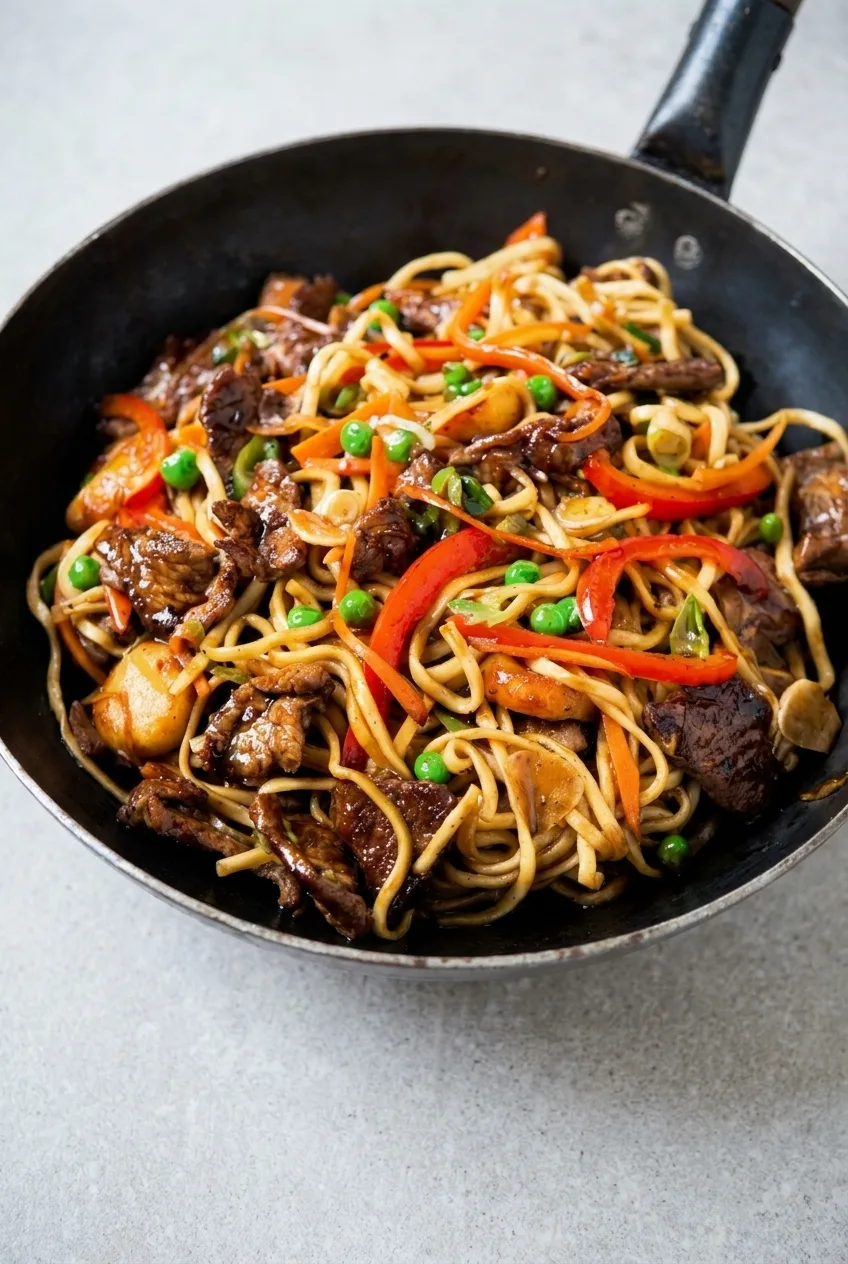
Hairy Bikers Pork Chow Mein Recipe
Description
The pork is tossed in five-spice and seared first, then lifted out while the vegetables go in. Everything comes back to the wok with a sauce of dark soy, mirin, brown sugar and cornflour, which turns glossy in the last minute. Four portions out of one pan.
Ingredients
For the Pork:
For the Noodles and Vegetables:
For the Sauce:
Instructions
- Season the pork: Trim off as much fat and sinew as you can, then cut the pork in half lengthways and into thin slices. Toss it in a bowl with the five-spice, half a teaspoon of salt and plenty of pepper, then set it aside.
- Boil the noodles: Bring a pan of water to the boil and add the noodles, swishing them with a long wooden spoon to separate the strands. Bring it back to the boil and cook for 3 to 4 minutes, or as the packet says, until tender.
- Rinse and oil them: Drain the noodles and rinse them in a sieve under running water until completely cold, then toss them with a tablespoon of the oil and set them aside.
- Mix the sauce: Stir the sugar and cornflour together in a bowl, then gradually add the soy sauce, mirin and 100ml water so it stays smooth. Set it aside.
- Sear the pork: Heat a tablespoon of oil in a wok or large non-stick frying pan, then stir-fry the pork over a high heat for 2 minutes until nicely browned. Move it to a plate and put the pan back on the heat.
- Fry the vegetables: Add another tablespoon of oil and stir-fry the pepper and carrot for 2 minutes, then add the ginger, garlic, spring onions, peas and water chestnuts and stir-fry for 2 minutes more, until softened but still with some bite.
- Crisp the noodles: Pour in the last of the oil and add the noodles, stir-frying for 2 to 3 minutes until some are turning crisp and golden brown. Tip the pork and vegetables back in.
- Bring it together: Stir the sauce again and pour it into the pan, then keep tossing everything for 1 to 2 minutes until hot and glossy.
FAQs
Can I use fresh noodles instead of dried?
You can, but you lose the whole point of the recipe. Fresh egg noodles are already soft and hold far more water, so they steam in the wok rather than crisping, and you end up with the soft texture all the way through.
If fresh is what you have, cook them for the shortest time the packet allows, then drain them very thoroughly and give them longer in the pan than the recipe says. You will get colour on some strands eventually, it just takes more patience than dried noodles need.
Mirin or dry sherry, does it matter?
The recipe offers both and they are genuinely interchangeable here, since there is already 2 tablespoons of brown sugar in the sauce doing the sweetening. Mirin is sweeter, sherry is drier and slightly nuttier.
Sherry is the easier one to justify buying, because a bottle keeps for months and gets used in gravies. If you want a third option, the chinese chicken curry uses 100ml of Shaoxing rice wine, and a couple of tablespoons of that works fine in this sauce too.
Why does the pork come out of the pan?
Because 500g of meat dropped into a wok kills the heat instantly, and once the temperature falls the pork releases liquid and boils rather than browns. Two minutes on its own gets colour on it while the pan is still fierce.
It also stops the pork overcooking while everything else catches up. Tenderloin is very lean, so by the time the carrots have softened it would be dry. Worth knowing that the sweet and sour pork uses the same 500g of pork fillet and does the opposite, leaving it in the wok the whole way and tossing it in cornflour first so it holds moisture.
The chicken stir fry uses that same cornflour trick. Either approach works, but you cannot mix them, because floured pork will not brown properly in two minutes.
Do I really need a wok?
A large non-stick frying pan is offered in the recipe and it works, though a wok does the job better for one specific reason. The sloping sides let you push cooked things up out of the heat while something else fries in the base, which is exactly what step seven asks for.
In a flat pan everything sits in the hot zone at once, so watch the noodles more closely. You will get some crisp strands, just fewer of them.
Can I make this ahead?
Not really, and pork chow mein Hairy Bikers style is built to be served the moment it leaves the wok. The crisp noodles go soft within minutes of the sauce hitting them, and reheating turns the whole thing into one soft mass.
If you want a pork dish that does reheat properly, the spicy pork and rice uses the same tenderloin but simmers it in stock, so it holds together the next day. Chow mein is a cook-it-and-sit-down dish.