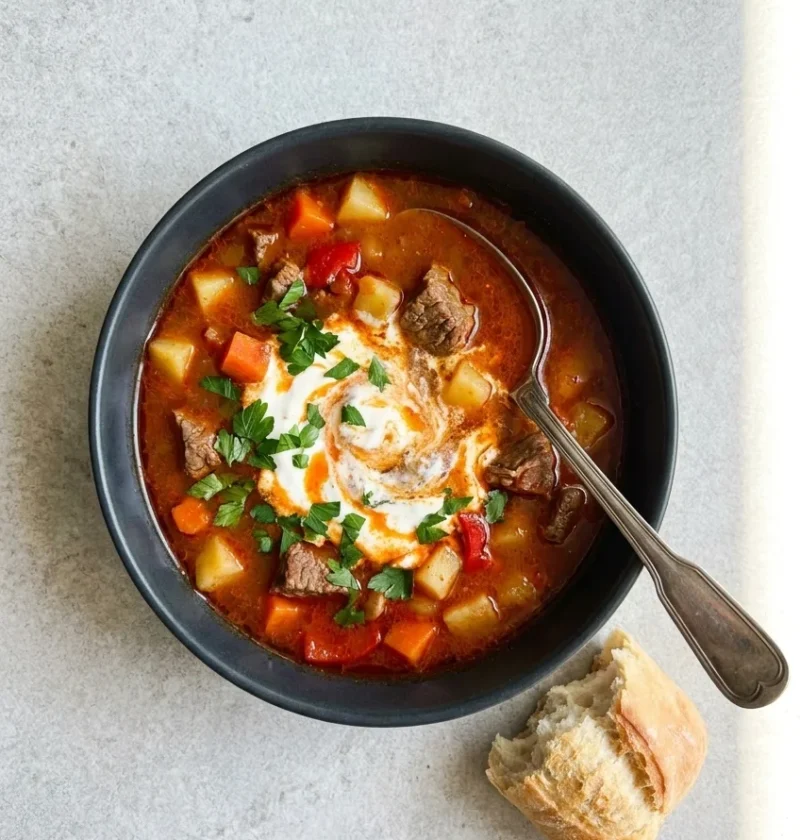
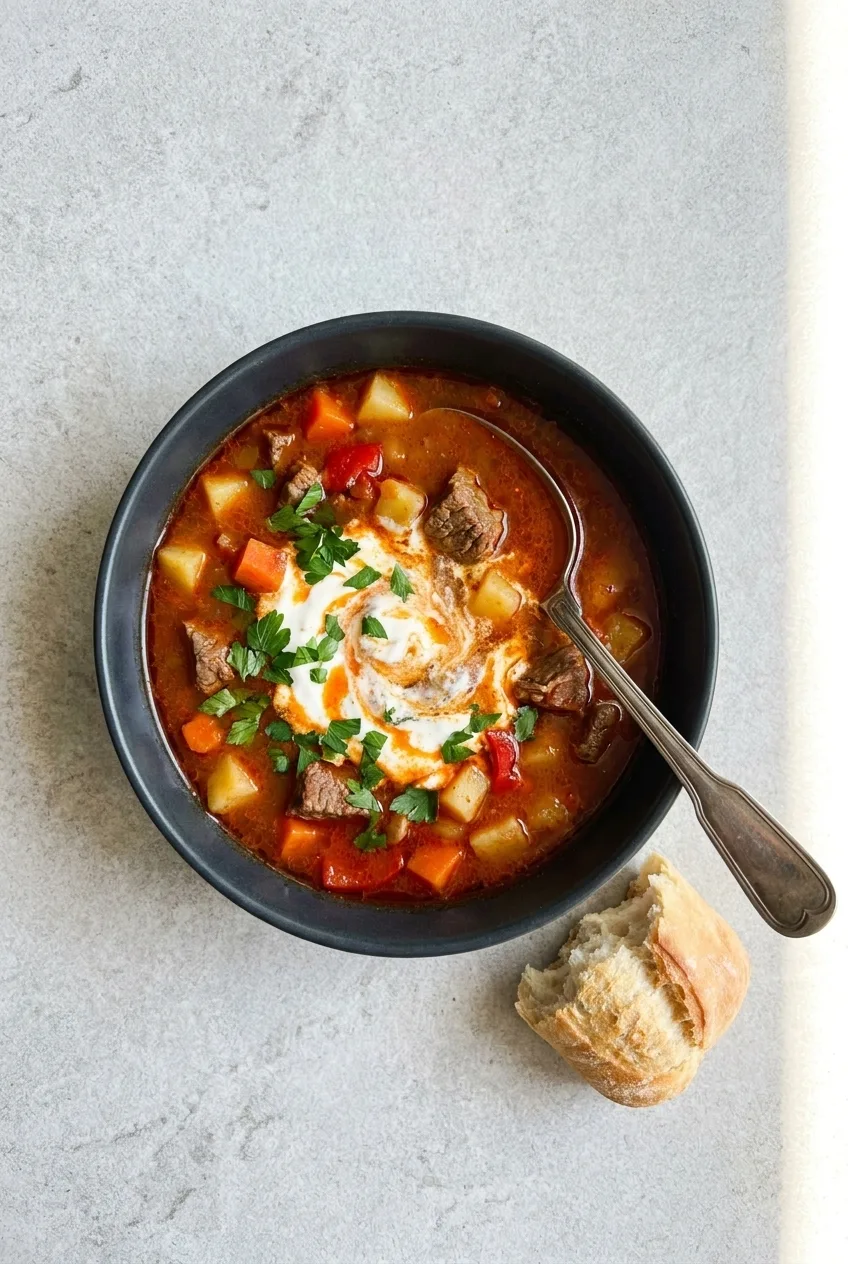
Four tablespoons of paprika in a single pot of soup sounds like a mistake, but this Hairy Bikers goulash soup recipe from the Big Book of Baking needs every gram. Si and Dave brought it back from Hungary on the Bakeation series at around 390 calories per serving and just under three hours of slow simmering.
They call it “a soup for heroes” and say not to be scared by the paprika because it works. The confidence shows, since they picked up the crushed caraway seed technique in Hungary during the Bakeation trip and it gives the broth a warm, earthy depth that plain paprika alone cannot reach.
Browning the beef in small batches is what builds the depth here, because flour-coated chunks need space and high heat to sear properly. Si and Dave warn not to crowd the pan or the meat will steam rather than brown, and that single step is the difference between a rich dark broth and a flat grey one.
Hairy Bikers Goulash Soup Recipe
Description
Chunks of beef or venison simmered with crushed caraway seeds, five garlic cloves, and more paprika than you think possible in a rich broth topped with soured cream. A main meal soup that Si and Dave learned to make in Hungary.
Ingredients
For the Soup:
To Serve:
Instructions
- Dust and brown the beef: Mix the flour with a teaspoon each of salt and pepper in a large bowl, then add the beef and toss until every chunk is coated. Heat a tablespoon of oil in a large frying pan and brown the beef in small batches, setting each one aside before adding the next so the pan stays hot and the meat sears rather than steams.
- Soften the vegetables: Meanwhile, heat a little oil in a large heavy-bottomed pan and add the onions, carrots, celery, red pepper, and garlic. Cook gently for about 10 minutes until they start to soften and the kitchen smells sweet.
- Build the soup: Add the browned beef to the vegetables along with the paprika, crushed caraway seeds, tomato puree, and bay leaves, then pour in the beef stock and stir well. Bring to a simmer, cover the pan, and leave to cook gently for at least an hour and a half until the beef is starting to get tender.
- Add the potatoes and finish: Drop in the potato cubes and continue to simmer for another 30 minutes until the potatoes are soft and the beef pulls apart easily. Check the seasoning, then serve in deep bowls with a generous swirl of soured cream and a good scattering of flat-leaf parsley.
FAQs
Why does this soup use so much paprika?
The 2 litres of stock dilutes flavour far more than the 600ml in a thick stew, so you need roughly four times more paprika to get the same punch. Si and Dave’s hungarian goulash from One Pot Wonders uses just 1 tablespoon of sweet paprika plus a teaspoon of hot, because the concentrated sauce carries the spice without any dilution.
Four tablespoons sounds bold, but Hungarian cooks treat paprika the way Indian cooks treat turmeric: it is the base flavour, not a garnish. Buy the best sweet Hungarian paprika you can find, since cheap supermarket tins fade fast once opened.
Can I use venison instead of beef?
Yes, and the recipe says so directly. Venison gives a deeper, gamier flavour that is closer to what Hungarian herdsmen would have cooked with historically, since they used whatever wild game they had on the plains. Pork shoulder is another strong option, and the pork goulash uses the same crushed caraway and flour-dusted browning from this recipe with a thicker, stew-style sauce.
Use shoulder or shin of venison and cut it the same size as the beef. It needs the same long simmer to break down, but the broth ends up darker and more intense. If you find venison too lean, add a tablespoon of butter to the browning step so the flour crust colours properly.
What are the scones mentioned in the book?
The facing page in the Big Book of Baking has a recipe for pogacsa, which are Hungarian bacon scones made with yeast, Parmesan, caraway seeds, and streaky bacon. Si and Dave say in the headnote that you “have to cook this to go with the pogacsa,” so they designed the two recipes as a pair.
Pogacsa are closer to a savoury bread roll than a British scone, and the caraway seeds in both recipes tie the flavours together. If you do not want to make them from scratch, warm crusty bread or even cheese scones from a bakery work well for dunking into the broth.
What is the difference between goulash soup and goulash stew?
Goulash soup uses far more liquid, 2 litres of stock in this recipe, and includes root vegetables and potatoes that cook down into the broth. The stew version uses around 600ml of stock for a thicker, more concentrated sauce and is usually served with dumplings or bread instead of potatoes.
The flour dusting on the beef also plays a different role here: it thickens the broth slightly during the long simmer, which gives the soup body without turning it into a stew. If you want the thicker version with suet dumplings, the hungarian goulash from One Pot Wonders is what you are after.
How should I store leftovers?
This soup keeps well in the fridge for up to three days in a sealed container, and it tastes better the next day once the paprika has had time to mellow into the broth. The potatoes soften further overnight, which actually thickens the soup naturally.
It freezes for up to three months, but the potatoes can go grainy when thawed. If you plan to freeze a batch, leave the potatoes out and add fresh ones when you reheat. For another hearty soup that batch cooks well, the lamb stew follows the same low-and-slow method and freezes without any texture issues.