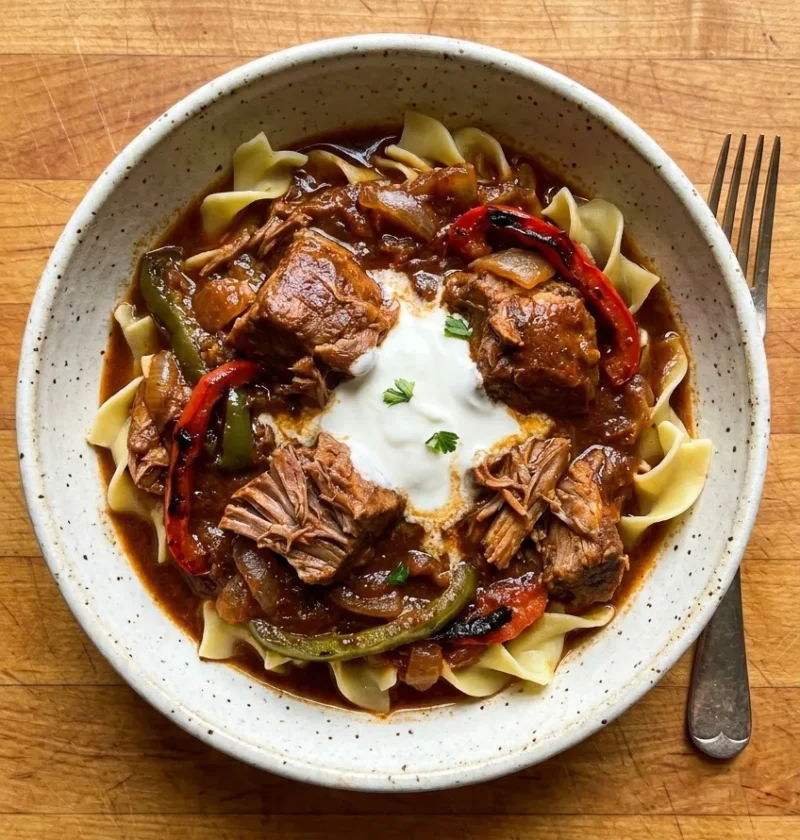
Si and Dave never published a pork goulash, but after cooking all three of their beef versions I built this Hairy Bikers pork goulash recipe using their techniques and pork shoulder instead. It takes about three hours with the slow simmer, serves 6 at 355 calories, and every method step traces back to a specific cookbook.
The pepper searing comes from One Pot Wonders, where they char the skins on high heat for a smoky edge before adding them back later. The flour-dusted browning and crushed caraway seeds come from the Big Book of Baking goulash soup, and together they give the sauce a thickness and warmth that plain paprika alone cannot deliver.
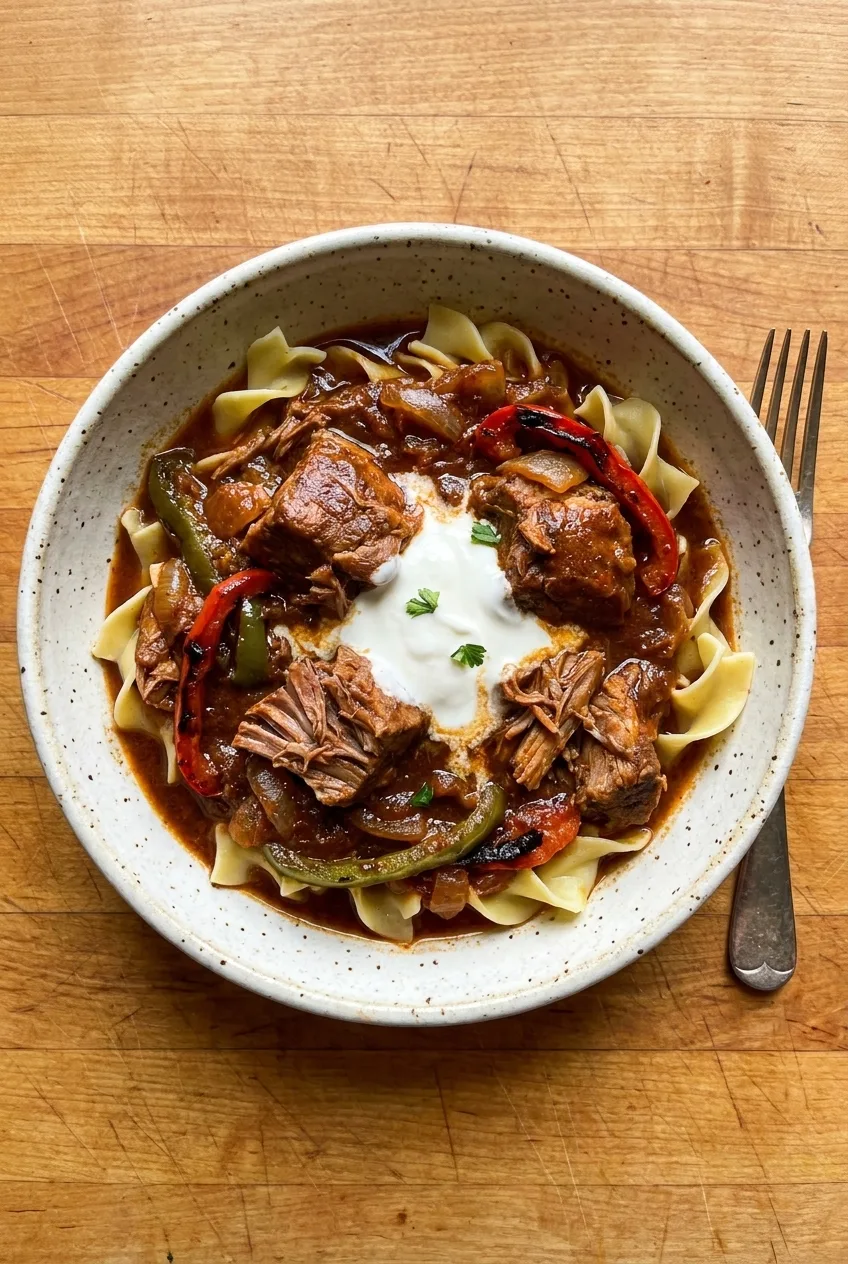
Pork shoulder needs longer than beef chuck because the connective tissue breaks down slower, so I give it a full two and a half hours at a gentle simmer. By that point the meat pulls apart with a fork, and the sauce has reduced into a thick paprika glaze that clings to every piece.
Hairy Bikers Pork Goulash Recipe
Description
Pork shoulder slow-simmered in a paprika and caraway sauce with blistered peppers and a soured cream finish, built from techniques across three Hairy Bikers goulash recipes. Not in any cookbook but tested in my kitchen until it earned its place on the site.
Ingredients
For the Pork Goulash:
To Serve:
Instructions
- Sear the peppers: Heat a tablespoon of the oil or dripping in a large flameproof casserole dish, then add all the peppers and cook over a high heat until the skins are blistered and starting to char. Remove them and set aside for later, since they go back in during the last 30 minutes.
- Dust and brown the pork: Mix the flour with a teaspoon each of salt and pepper in a bowl, then toss the pork chunks until every piece is coated. Brown the pork in the same pan in small batches over a high heat, setting each batch aside so the pan stays hot and the meat sears rather than steams.
- Build the base: Add the remaining oil or dripping to the pan and cook the onions over a medium heat until they soften and take on some colour. Return the pork and sprinkle over both paprikas, the crushed caraway seeds, tomato puree, and garlic, then stir everything together and pour in the stock. Bring to the boil, drop the heat to a gentle simmer, and add the bay leaf with plenty of seasoning.
- Slow simmer: Cover with a tight lid and leave to simmer for 2 to 2 and a half hours, checking every 45 minutes and adding a splash of stock if it looks dry. The pork is ready when it pulls apart easily with a fork.
- Return the peppers and serve: Add the seared peppers back to the pan and simmer uncovered for a final 30 minutes so the sauce reduces and thickens. Serve in deep bowls with a generous spoonful of soured cream and egg noodles or crusty bread alongside.
FAQs
Why is there no Hairy Bikers pork goulash in any cookbook?
Si and Dave published three beef goulash recipes across three books but never a pork version, and I have no idea why because pork shoulder works brilliantly with the same paprika and caraway base. Traditional Czech and Austrian goulash uses pork just as often as beef, so the technique is well established even if Si and Dave never put it in print.
This recipe is my own, built after cooking the hungarian goulash from One Pot Wonders and the goulash soup from the Big Book of Baking enough times to know exactly how their methods work. Every technique traces back to one of those books.
Is this the same as paprika pork?
Same dish, different name. Plenty of people call it paprika pork because the paprika is what you taste first, and there is a tablespoon of sweet and a teaspoon of hot in here.
Goulash is simply the Hungarian word for it, and paprika is the ingredient the whole cuisine is built on. If you searched for paprika pork and landed here, this is what you were after.
Can I make this in a slow cooker?
Yes, and pork shoulder is one of the best cuts for slow cooking because the fat and connective tissue melt down over the long cook. Sear the peppers and brown the flour-dusted pork on the hob first, then transfer everything to the slow cooker with the stock, paprikas, caraway, puree, and garlic.
Cook on low for 7 to 8 hours or high for 4 to 5 hours, then add the peppers for the last hour with the lid back on. The sauce will not reduce as much in a slow cooker, so stir in an extra tablespoon of tomato puree at the start to keep the flavour concentrated.
What is the difference between this and the beef goulash?
The biggest difference is time, because pork shoulder has more connective tissue than beef chuck and needs an extra hour to reach the falling-apart stage. The flavour is slightly sweeter too, since pork fat renders differently from beef and gives the sauce a rounder, less mineral taste.
I also skip the dumplings here to keep the two recipes distinct. The hungarian goulash is the dumpling version, and this one is better with egg noodles or bread that soak up the thinner, more brothy sauce.
Why use tomato puree instead of canned tomatoes?
Si and Dave use puree rather than canned tomatoes in the One Pot Wonders goulash, and once I tried both I understood why. Puree gives a concentrated tomato flavour and a thicker sauce that coats the meat, while canned tomatoes make the sauce watery and more acidic.
The Dieters version from Eat for Life does use canned tomatoes, but that recipe needs the extra liquid because it has no flour or fat to thicken the base. With the flour-dusted pork and puree in this recipe, the sauce reduces into a sticky glaze that you want on every forkful.
What cut of pork should I use?
Shoulder is the only cut that works for a slow simmer like this, because it has enough fat and connective tissue to stay juicy over two and a half hours. Tenderloin or loin will dry out and turn stringy long before the sauce has time to develop.
Ask your butcher for boneless pork shoulder and dice it yourself into 3 to 4cm chunks. If you can only find a bone-in shoulder, allow an extra 200g to account for the bone weight and trim any large pieces of hard fat before browning. The lamb stew follows the same principle: tough cuts with connective tissue that melt into the sauce over time.