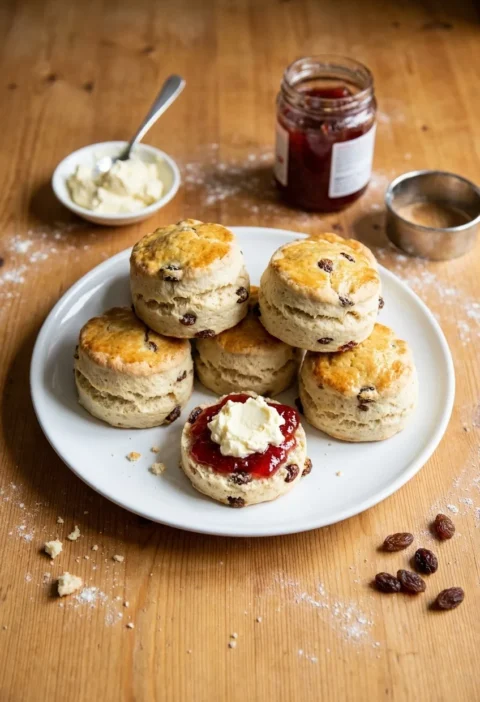
The Marmite never touches the flour in Hairy Bikers cheese and Marmite scones. It gets whisked into warm milk first, until the milk turns the colour of milky coffee, and that mixture becomes both the liquid and the glaze. Veggie Feasts makes 8 to 9 at about 290 calories each.
They warn you about overmixing in the book, saying the scones will be more use as hand grenades than for tea with the vicar. The other tip is the cutter: press it straight down and never twist, or the scones come out lopsided.
Cold is the theme running through this recipe. Chilled butter, cooled Marmite milk, and half an hour in the fridge for the rubbed-in mixture if you have time, because cold butter melts in the oven and leaves the pockets of steam that lift a scone.

Hairy Bikers Cheese and Marmite Scones
Description
A tablespoon of the Marmite milk is held back to brush over the tops before baking. The rest goes into flour, butter, Cheddar, mustard powder and a spoonful of sugar. These Hairy Bikers cheese and Marmite scones make 8 or 9 and bake in 12 to 15 minutes.
Ingredients
Instructions
- Make the Marmite milk: Heat the milk in a pan until it just starts to feel hot, about blood temperature. Whisk in the Marmite until it has combined completely and the milk turns the colour of milky coffee. Take it off the heat and leave it to cool, or chill it if you have time.
- Rub in the butter: Mix the flour, baking powder and salt in a bowl. Add the butter and rub it in until the mixture looks like fine breadcrumbs.
- Add the cheese: Stir in the grated cheese, mustard powder and sugar. If you have time, chill the bowl for half an hour.
- Heat the oven: Preheat to 220°C, fan 200°C, gas 7, and line a baking tray with baking paper.
- Mix the dough: Hold back a tablespoon of the Marmite milk for the glaze and pour the rest into the dry ingredients. Mix as quickly as you can with a table knife or your fingers. Do not overwork it.
- Cut the scones: Turn the dough out onto a floured surface and pat it down to about 3cm thick with your hands. Dip a 6cm cutter in flour and press straight down without twisting. Squash the offcuts together and cut again, for 8 or 9 in total.
- Bake: Put them on the tray, brush with the reserved Marmite milk and bake for 12 to 15 minutes, until well risen and deep golden brown. Eat hot or cold with lots of butter.
FAQs
Why heat the milk before adding the Marmite?
Because Marmite is thick and sticky, and cold milk will not take it. Warm the milk to blood temperature, a little hotter than tepid, and it dissolves completely.
You will know it has worked when the milk turns the colour of milky coffee, which is the test the book gives. Cold milk leaves lumps that end up as dark salty patches in the finished scones.
Can I taste the Marmite?
Yes, but less sharply than you would expect. One tablespoon across nine scones gives a savoury, malty depth rather than the hit you get from Marmite on toast.
The mustard powder and 150g of Cheddar are doing plenty of work alongside it. For something stronger, brush the tops twice with the glaze rather than adding more to the dough, since extra Marmite in the mix just makes them salty.
Why is there sugar in a savoury scone?
One tablespoon, and it is there for browning as much as for taste. Sugar helps the tops colour, which is why these come out deep golden rather than pale.
It also balances the salt from the Marmite and the cheese, so you never taste it as sweetness. Their rock cakes use the same rubbed-in method with far more sugar, and the difference in texture tells you what sugar does to a dough.
How do I stop them being tough?
Stop mixing sooner than feels right, and never twist the cutter. The book is blunt about the first one, saying overworked dough gives you scones more use as hand grenades than for tea with the vicar.
Use a table knife rather than your hands, and stop the moment it holds together. Pat the dough with your palms instead of rolling it. Twisting the cutter seals the cut edge, so the scone rises lopsided, which the book admits tastes just as good but looks wrong.
How long do they keep?
Best on the day, like any scone, and the book says eat them hot or cold with lots of butter. After that they go dry rather than stale.
Two days in an airtight tin is the limit, and a few minutes in a warm oven brings them back. They freeze well once baked and cooled, so bake the full batch of nine and freeze what you will not eat. Their bara brith is the opposite, a bake that improves after a day or two wrapped up.