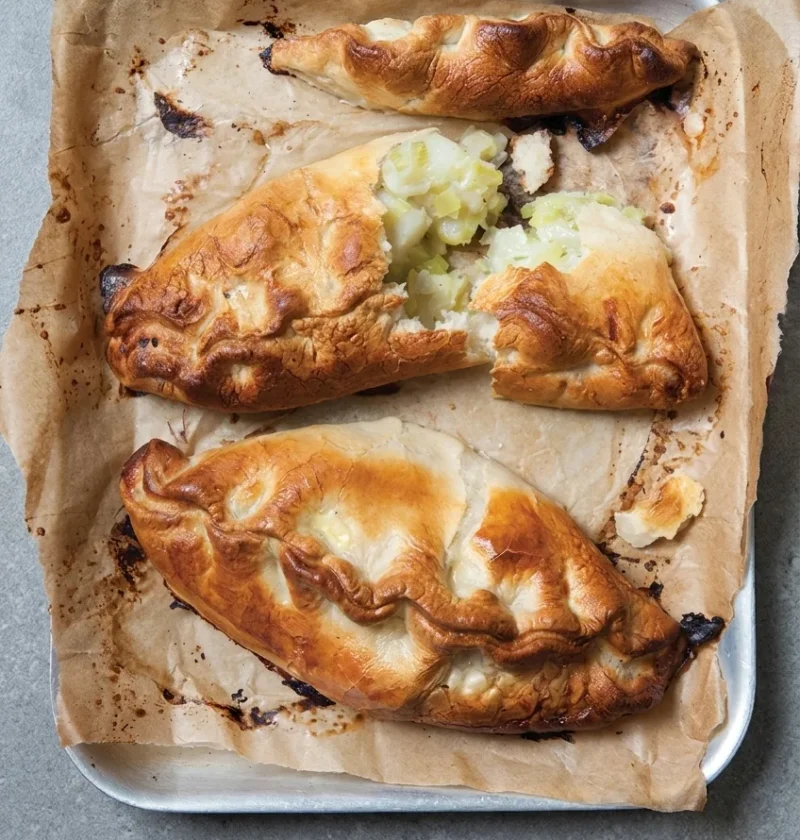
The filling for this Hairy Bikers Cornish pasty goes in completely raw: beef skirt, potato, swede and onion, all chopped fine. You will find it in British Classics, and it makes 6 pasties at 630 calories each across 2 hours 45.
Cornwall is where Si and Dave worked this one out, on a Food Tour trip driven by “a lot of passion about pasties”. So they cooked the result at the Eden Centre, then left it unchanged in British Classics because it could not be improved.
Chopping is what decides this one, because raw beef and swede will only soften inside the pastry if the pieces are small. Take your time with the knife then, since golden pastry counts for nothing if the swede inside stays hard.
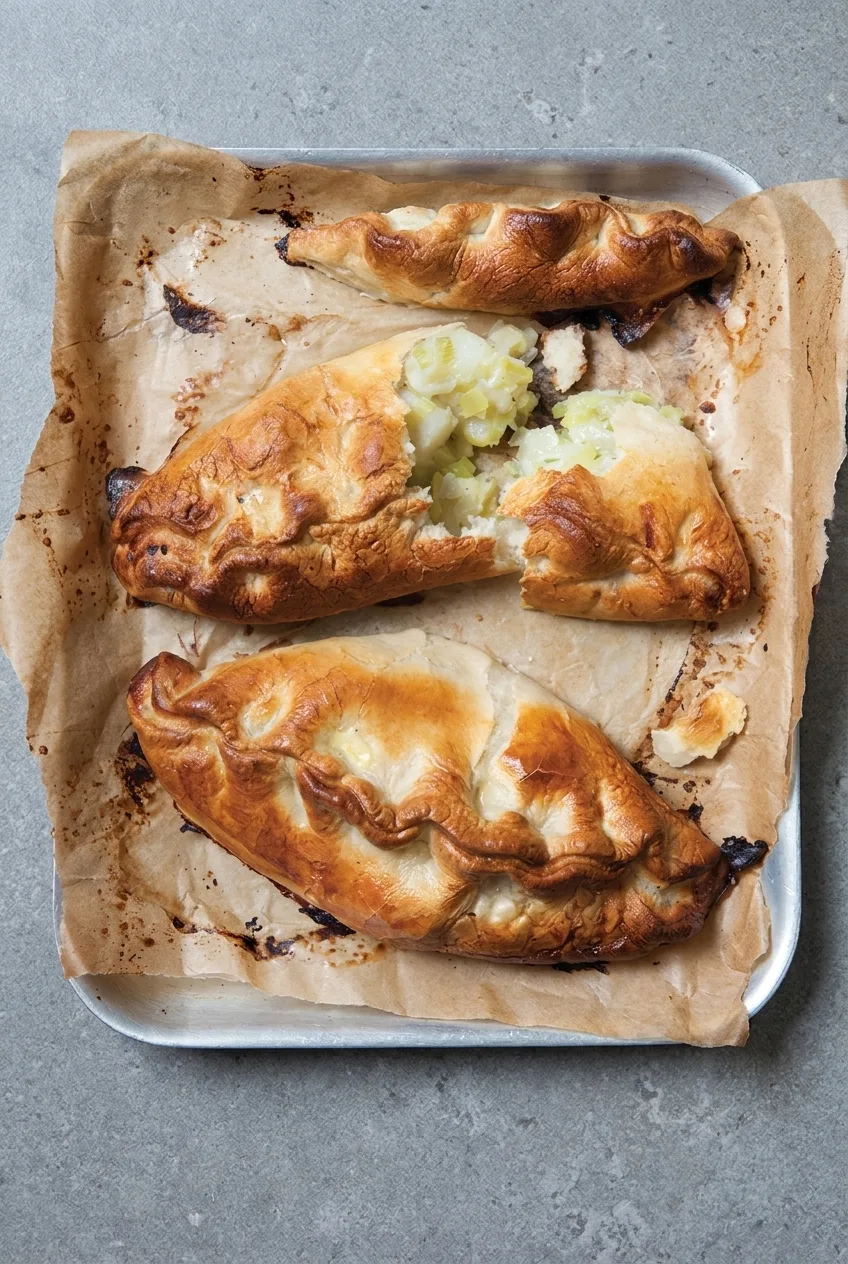
Hairy Bikers Cornish Pasty
Description
A proper Cornish pasty needs a firm shortcrust, so this one carries baking powder and a full hour of chilling before rolling. Let the baked pasties settle for ten minutes afterwards, because the filling needs that pause to stop sliding out.
Ingredients
For the Filling
For the Pastry
Instructions
- Make the pastry: Blend the flour, baking powder, salt, butter and egg yolks in a food processor until it looks like breadcrumbs. Then add the water in a thin stream with the motor running, and stop as soon as it comes together. You may not need all of it, so go slowly near the end.
- Chill it: Wrap the pastry in cling film and chill it for an hour, then preheat the oven to 180°C/Fan 160°C/Gas 4.
- Season the filling: Toss the chopped beef with the tablespoon of flour until every piece is coated, then season it well. Season all the vegetables separately too, since they go in raw and need it.
- Roll the discs: Divide the pastry into 6 and roll each piece to about 5mm on a floured surface. Then cut a neat disc from each one, using a side plate as your template.
- Layer it up: Spoon potato onto one half of each disc leaving 1.5cm clear at the edge, then add swede, then onion, and finally the beef.
- Seal: Brush the edges with beaten egg, fold the empty half over and press all round with a fork, then brush the top with more egg.
- Cut the vent: Slash a small cross in the top of each pasty with a sharp knife. That gives the steam somewhere to go instead of bursting the seal.
- Bake: Bake for 45 to 50 minutes until the pastry is crisp and golden brown and the filling is piping hot right through.
- Let them settle: Rest the pasties for 5 to 10 minutes before eating, since the filling needs that time to stop sliding out.
FAQs
Why do the vegetables go in raw?
Because that is how a proper pasty cooks itself, and both cookbook versions insist on it. Perfect Pies spells out the reasoning, because a sealed case traps every bit of moisture and that is exactly where the flavour comes from.
Their own website disagrees though, as the version there boils the swede and potato for four or five minutes first. So you have a genuine split between three of their recipes, and the two books outvote the site.
Which beef cut works, and what if I cannot get skirt?
The book asks for beef skirt, but it gives braising steak as the alternative in the same line. Skirt is the traditional choice, since it is loose grained and gives up its juices into the veg while it steams.
Braising steak works because it behaves the same way over a long bake, though you must chop it just as finely. If you end up with a spare pack, their braised steak with gravy uses the same cut over 105 minutes.
How thick should the pastry be rolled?
Roll it to about 5mm, then cut your disc round a side plate rather than a dinner plate. That is a cross check between their two books, because British Classics says dinner plate while dividing the dough into six.
Six pieces spread that wide would come out around 2mm, so the pastry would split under the filling. Perfect Pies uses the same weight of dough and states 5mm outright, which is the figure that actually works.
Is the baking powder in the pastry a mistake?
It is not a mistake, and it is one of the few things all three of their versions agree on. Both books use 2 tsp with 450g flour, while the website uses 1 tsp with 225g, so the ratio never changes.
It gives the crust a slight lift and a softer bite than a plain shortcrust would. That matters here, because the pastry has to survive fifty minutes without going hard.
Can I make them ahead or eat them cold?
You can, and their own site recommends making them ahead for a party or a picnic. Cold pasty is a proper thing rather than a compromise, so do not feel you have to reheat it.
A spoonful of their rhubarb chutney cuts through the pastry nicely when they are served cold. If you want them hot instead, their leek and potato soup makes a light starter alongside.