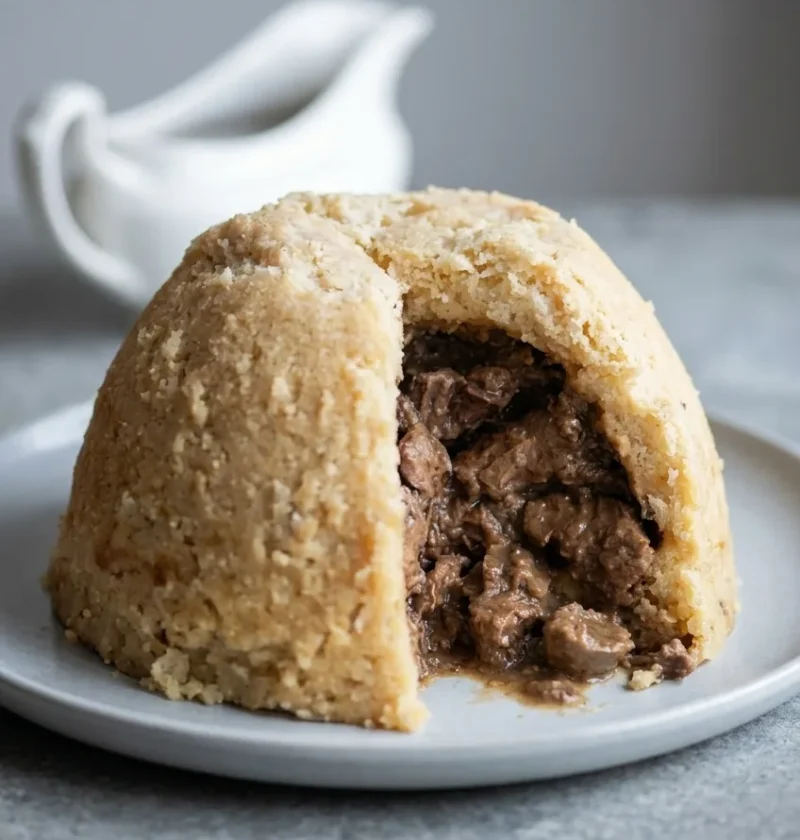
Here is the thing most people searching for a Hairy Bikers steak and kidney pie do not know: the Bikers make it as a pudding. Their Perfect Pies book steams it in a suet crust the old way, and it serves 6 at around 640 calories over roughly 5 hours.
The word steamed puts people off, yet it is exactly why this beats a pastry pie. The suet crust drinks up the wine gravy as it steams, so every slice comes out soft, rich, and soaked in flavour.
Before the basin ever appears, the steak and kidneys braise for up to two hours in red wine and stock. That slow first cook is where the meat turns tender, so the steaming later only has to work on the crust.
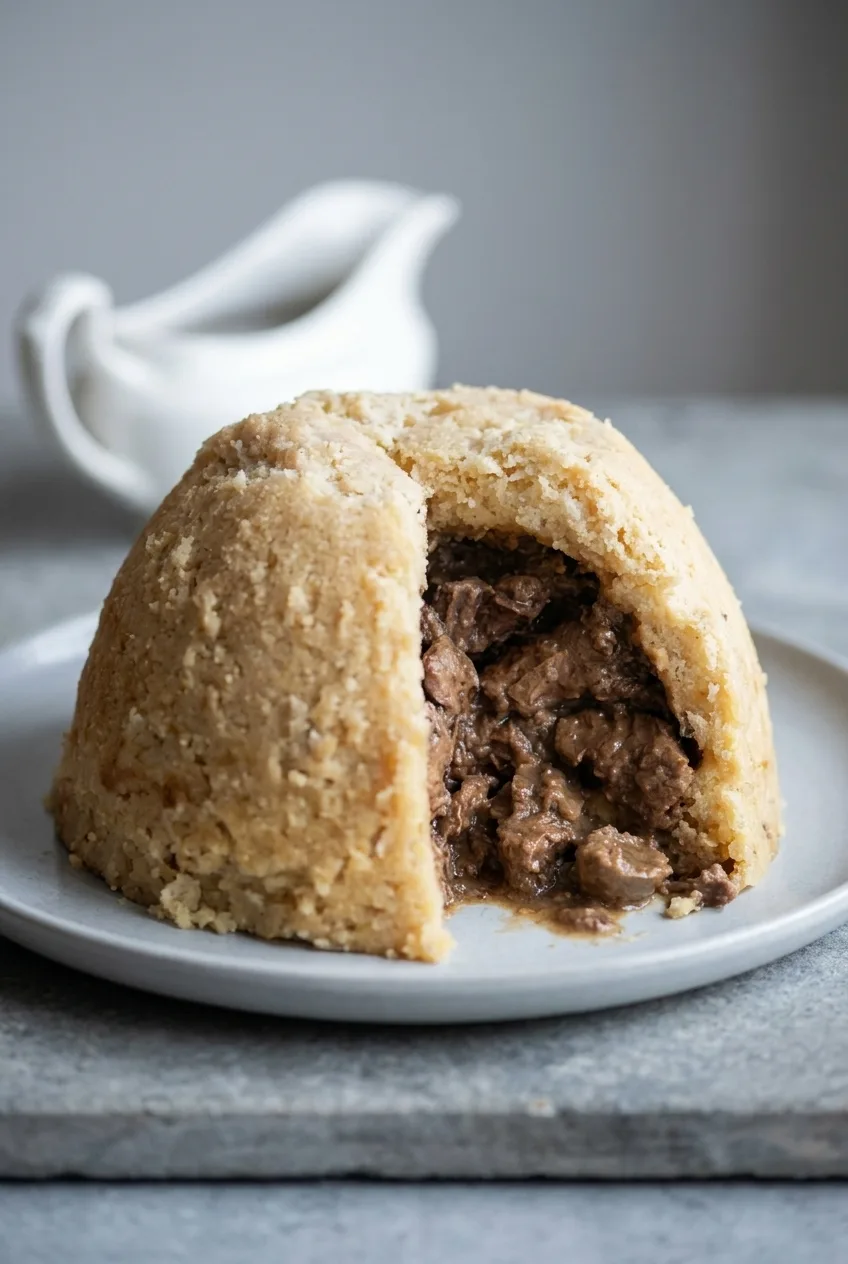
Hairy Bikers Steak and Kidney Pudding Recipe
Description
Floured steak and kidney chunks brown in batches, then braise slowly with onion, red wine, thyme, and stock until tender. The filling goes into a suet-lined basin under a pastry lid, steams for two and a half hours, and turns out with a jug of gravy saved from the braise.
Ingredients
For the Filling
For the Suet Pastry
Instructions
- Coat the meat: Cut the trimmed steak into 2.5cm cubes and the cored kidneys into 1.5cm chunks. Shake them in a bag with the flour, salt, and plenty of pepper until coated, then preheat the oven to 170°C.
- Brown and soften: Fry the meat in batches in 2 tablespoons of the oil until well browned, moving it to a casserole dish. Soften the onion in the remaining oil for 5 minutes, then stir it in.
- Braise the filling: Deglaze the pan with the wine, scraping up the sediment, then pour it over the meat. Add the thyme, bay, stock, and purée, then cover and cook in the oven for 1½-2 hours until tender.
- Save the gravy: Ladle out 3 ladlefuls of sauce and set them aside for serving. Simmer the rest for 2-3 minutes until it thickly coats the beef, then leave the filling to cool.
- Line the basin: Mix the flour, suet, and salt with about 300ml water into a soft, spongy dough. Roll three-quarters into a 25cm circle about 1cm thick, then line a buttered 1.5-litre basin, parchment circle in the base first.
- Fill and seal: Pile in the cooled filling and brush the pastry edge with water. Roll the remaining dough into a lid, press it on, and seal the edges.
- Steam the pudding: Cover with pleated parchment and foil, tie with string, and add a string handle. Steam on a trivet in simmering water for 2½ hours, topping up with hot water as needed.
- Turn out and serve: Rest the basin for 5 minutes while the reserved gravy heats through. Loosen the sides with a blunt knife, turn the pudding onto a deep plate, and serve with the hot gravy.
FAQs
Is this a steak and kidney pie or a pudding?
Both names get used, but they are different dishes, and the Bikers’ recipe is the pudding. A pudding steams inside a soft suet crust, while a pie bakes under crisp pastry in the oven.
The pudding is the older dish, which is why the book calls it “the classic of classics.” If a baked pastry pie is what you are really after, their steak and ale pie is the one to cook instead.
I hate kidneys, can I leave them out?
You can, and the Bikers themselves offer the swap in Meat Feasts, where they use just 2 kidneys and suggest portobellini mushrooms instead. The mushrooms bring the same earthy depth without the offal flavour.
This version uses 3 lambs’ kidneys, and the headnote is firm on coring them well, since the white cores carry the harsh taste people dislike. Fans of kidney should also try their Lancashire hotpot, which is the other place they use them.
How do I core the kidneys properly?
Coring decides whether people enjoy kidneys or swear off them, since the white core is where the bitter taste lives. Snip into each kidney and cut the whole pale centre out, taking a little extra rather than leaving any behind.
In Mums Still Know Best, Dave does this with a pair of hairdressing scissors, because thin sharp blades get right around the core. Any small sharp scissors work the same way, and it takes under a minute per kidney. And their Meat Feasts devilled kidneys are where the technique earns its keep, since a badly cored kidney ruins a four-minute dish.
Why set aside three ladles of sauce before filling the basin?
This is the trick that separates the book’s version from most others, and it solves the pudding’s classic problem. The filling sauce must be thick, or it leaks everywhere when you cut the crust.
Thick sauce alone makes a dry plate though, so the three reserved ladles become a proper jug of gravy for pouring. You get a clean cut and a wet plate, which most recipes force you to choose between.
What flour goes in the suet pastry, and can I flavour it?
This version uses self-raising flour, which gives the crust its light, spongy lift. Their Meat Feasts pudding builds the same lift from plain flour and baking powder instead, so either route works.
The book’s own tip is worth stealing too, since kneading 2 teaspoons of dried mixed herbs into the dough flavours the crust as it steams. Meat Feasts bakes dried thyme straight into its crust for the same reason.
Can I steam the pudding in a slow cooker?
Yes, and it is honestly the easiest way to hold a long steam, even though the book uses a pan on the hob. Sit the wrapped basin on a trivet or an upturned saucer inside the slow cooker, then pour in boiling water to halfway up the sides.
Cook on high for about 5 hours or low for 6 to 8, keeping the lid on so the water barely moves. The bonus is that a slow cooker cannot boil dry in an afternoon, which is the one thing that ruins a steamed pudding.
Can I make it ahead, and what should I serve with it?
The braised filling actually improves overnight in the fridge, so splitting the job across two days makes this much easier. Steam the pudding fresh on the day though, because the suet crust is at its best straight from the basin.
Buttery mash and greens are the classic plate, though for a lighter beef-and-potato supper on another night, their cottage pie takes half the time.