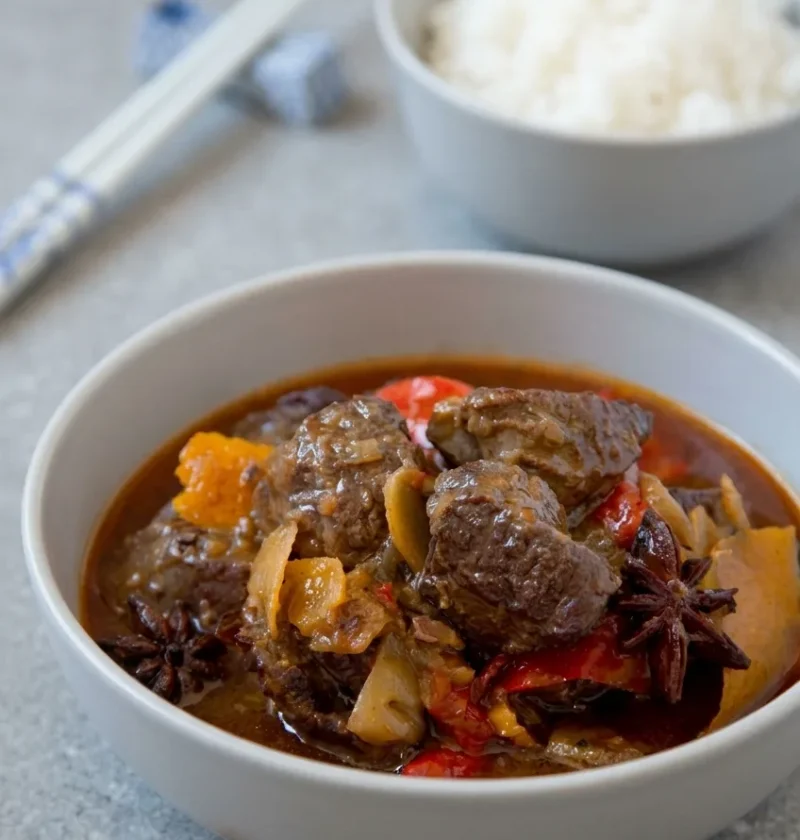
A strip of orange peel sits in the middle of this Hairy Bikers Chinese beef curry, and it belongs there. Their Asian Adventure recipe feeds 4-6 at around 500 calories, giving 1.25kg of beef shin up to 2½ hours to go completely tender.
The book says Chinese curries have a character everyone knows from the takeaway, and this is that exact flavour built at home. Star anise, cinnamon, orange, and soy do the work, so the heat stays gentle unless you push the chilli powder.
The shin is the real masterstroke though, because that hardworking cut carries more flavour than any steak at a fraction of the price. Its collagen melts slowly into the sauce, which is why the simmer runs as long as the beef demands.
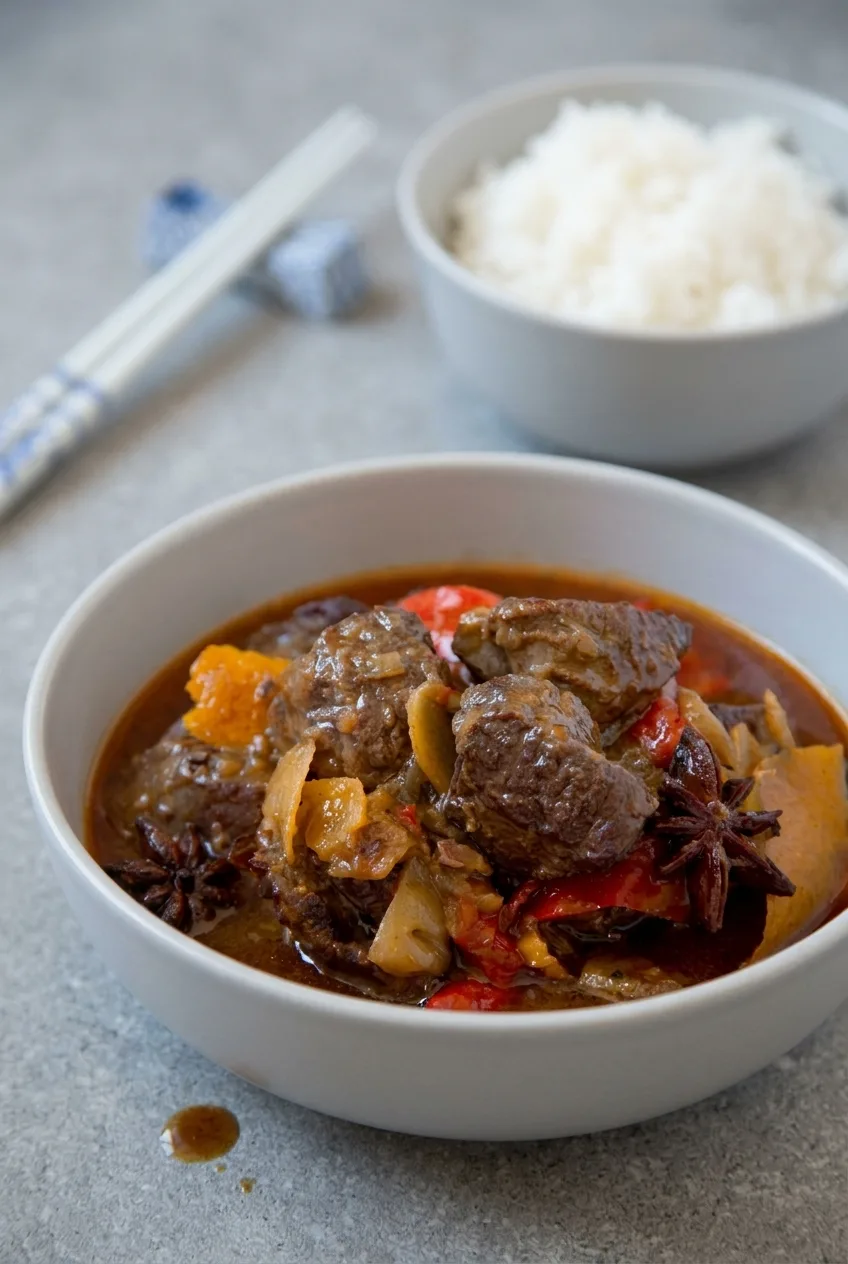
Hairy Bikers Chinese Beef Curry Recipe
Description
Chunks of beef shin brown hard in batches, then onions and red peppers soften before ginger, garlic, whole spices, orange peel, curry powder, and cornflour toast together. Shaoxing wine bubbles down by half, beef stock takes over, and everything simmers under an askew lid until the beef collapses, finished with soy sauce and coriander over rice.
Ingredients
Instructions
- Brown the shin hard: Season the beef well, then brown it in half the oil over a smoking-hot high heat, working in batches so the pan never crowds. Set each batch aside as it colours.
- Build the aromatics: Drop to a medium heat with the remaining oil, then sweat the onions and peppers until just softening. Add the ginger and garlic for a minute, then the star anise, cinnamon, orange peel, curry powder, and chilli powder.
- Toast in the thickener: Sprinkle the cornflour over everything and fry for another minute, stirring so nothing catches. The pan should smell incredible by now, which is your sign it’s working.
- Deglaze and simmer: Return the beef and its juices, crank the heat, then pour in the Shaoxing and let it bubble down by half. Add the stock, bring it to the boil, skim any scum, then drop to a simmer.
- Cook until it collapses: Sit the lid slightly askew so the sauce can reduce as it cooks, then simmer for at least an hour, topping up with a splash of liquid if it threatens to stick. Test the beef, and give it up to 2½ hours total until the chunks are meltingly tender.
- Finish with soy: Stir in the soy sauce and the coriander only at the end, so they stay bright rather than stewed. Serve over bowls of rice.
FAQs
Why does this curry use beef shin?
Shin is the leg’s working muscle, threaded with collagen that dissolves into silkiness over a long simmer while lean cuts just tighten. It also costs a fraction of steak money, which is exactly the thrifty thinking that runs through the book.
The same logic powers their braised beef, where feather blade does the identical slow-melting job in a red wine pot.
What makes a Chinese curry taste different from an Indian one?
The book names the signature itself, since anise, orange, and soy carry this dish where Indian curries lean on garam masala, tomatoes, and yoghurt. Curry powder still appears, but the whole spices and citrus pull everything toward the takeaway flavour you remember.
For the Indian takeaway classic done the same fakeaway way, their beef madras is the fiery counterpart.
What can I use instead of Shaoxing rice wine?
Dry sherry is the classic stand-in, matching Shaoxing’s nutty depth closely enough that most palates never notice. Use the same 100ml there too, and let it reduce identically.
If you cook without alcohol, extra beef stock with a teaspoon of rice vinegar covers the acidity, though the sauce loses a little of its roundness.
Why does the soy sauce go in at the end?
Because 2 hours of simmering turns soy dull and over-salty as the liquid reduces around it, so the book holds it back deliberately. Stirred in at the finish, it lands salty, fresh, and distinctly itself.
That’s also why you season the beef but taste before adding any more salt, since those 50ml carry plenty.
Can I make Chinese beef curry in a slow cooker?
Shin was built for slow cookers, so yes, with two adjustments. Brown the beef and toast the spice base in a pan first, then cook on low for 8 hours using 450ml of stock, since the askew-lid reduction can’t happen inside a sealed cooker.
Finish with a hob simmer if the sauce runs thin, then add the soy last as always. For another slow Asian curry from this same book, their massaman curry trades the soy-and-anise register for coconut and peanuts.